There will be a 1914 Village Fete at Leasowe Lighthouse on Sunday 7th September 2104 at 12 noon. All welcome.
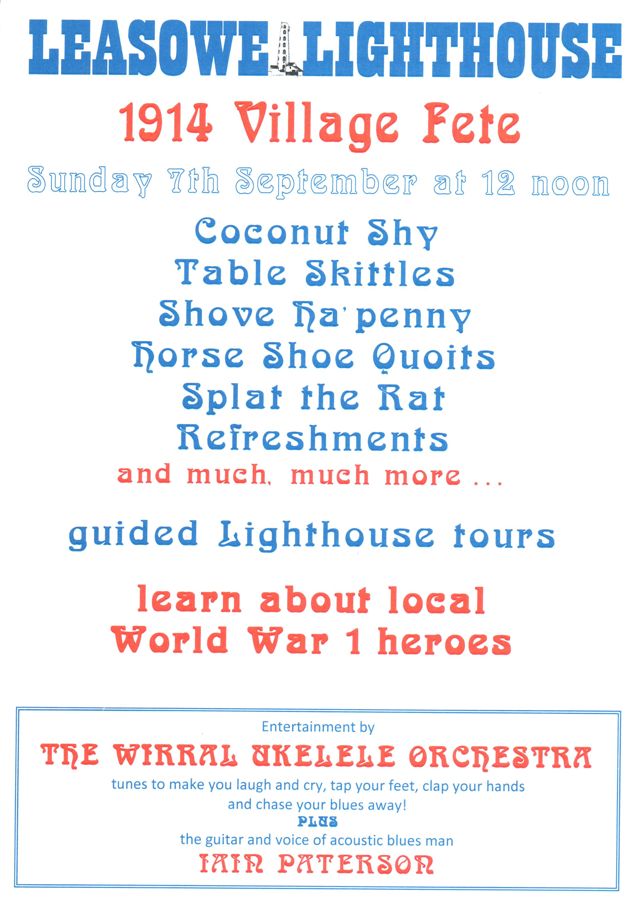
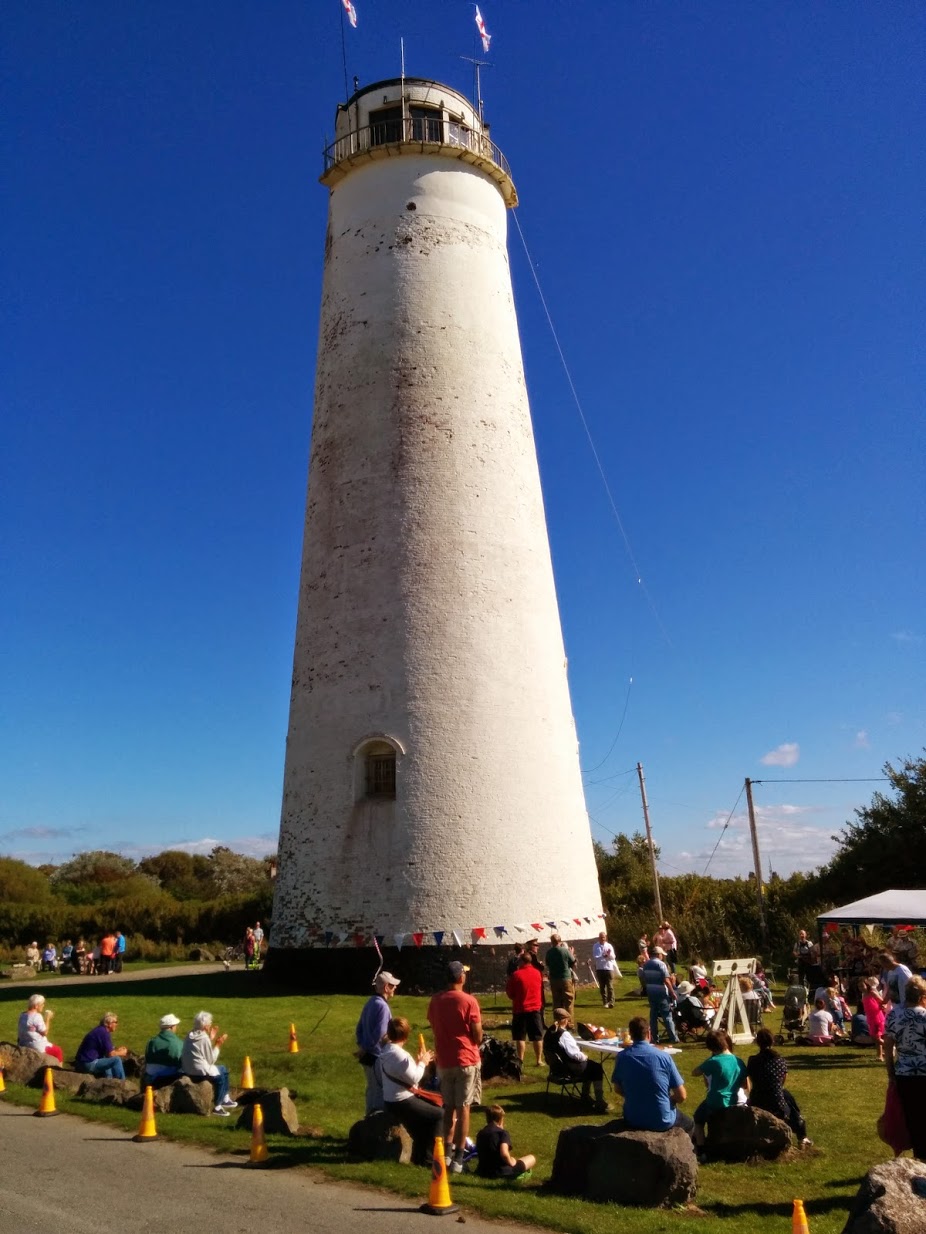
Leasowe Lighthouse Village Fete, 2014
There will be a 1914 Village Fete at Leasowe Lighthouse on Sunday 7th September 2104 at 12 noon. All welcome.
Leasowe Lighthouse Village Fete, 2014
Bidston Lighthouse is not for sale, contrary to reports in the Sun today (Wednesday 20 August, 2014).
The Sun ran a short article about publicly owned property up for sale and gave it pride of place on page 2 (adjacent to the midriff of the page 3 girl). Sun readers were informed that:
Also up for auction is an airfield, and the Bidston Observatory, Merseyside, which comes with a laboratory and lighthouse.
The Sun has managed to squeeze three factual errors into a single sentence.
The Grade-II listed Bidston Observatory is for sale, but not by auction. It has been on and off the market for ten years. Whoever buys it will be taking on a massive responsibility. A buyer who accepts the moral duty to preserve this important piece of Merseyside heritage and finds a way to open it to the public will be able to count on considerable community support, and ours. Conversely, a buyer otherwise inclined should expect opposition at every turn.
The laboratory would be the Joseph Proudman Building, which was demolished in February 2013. Neither the freehold nor the leasehold of the vacant site, which was originally the kitchen gardens for the lighthouse, is currently on the market.
The lighthouse is privately owned. We are not selling. But visitors are welcome on open days and other special occasions. We still have a few places left on tours we’re running for next month’s Wirral Heritage Open Days.
Ironically, Bidston Observatory is publicly owned but is not open to the public at all.
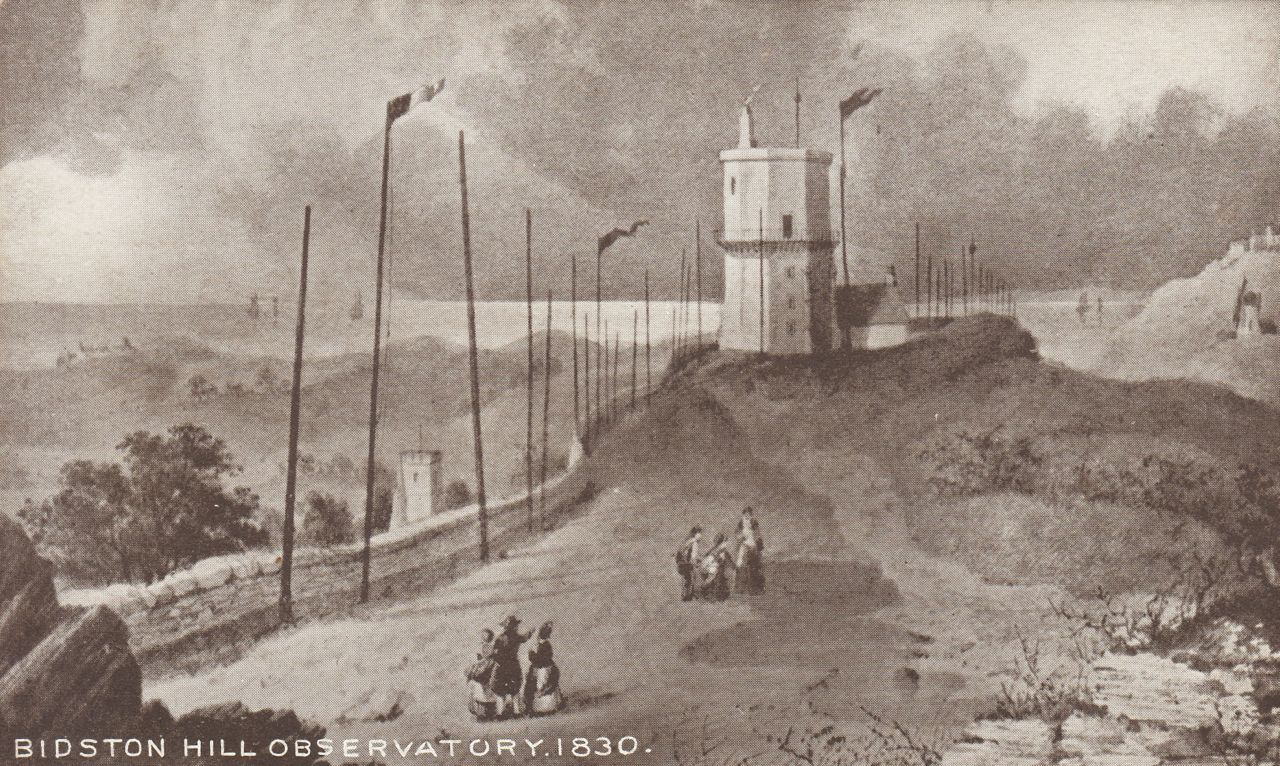
In defence of the Sun, they are not the first to confuse the Observatory and Lighthouse. This postcard, based on an 1830 engraving of the old Bidston Lighthouse and Signals Station has the caption “Bidston Hill Observatory 1830”. The Observatory was not built until 1866, when it replaced the original Liverpool Observatory which was forced to relocate due to the expansion of Waterloo Dock.
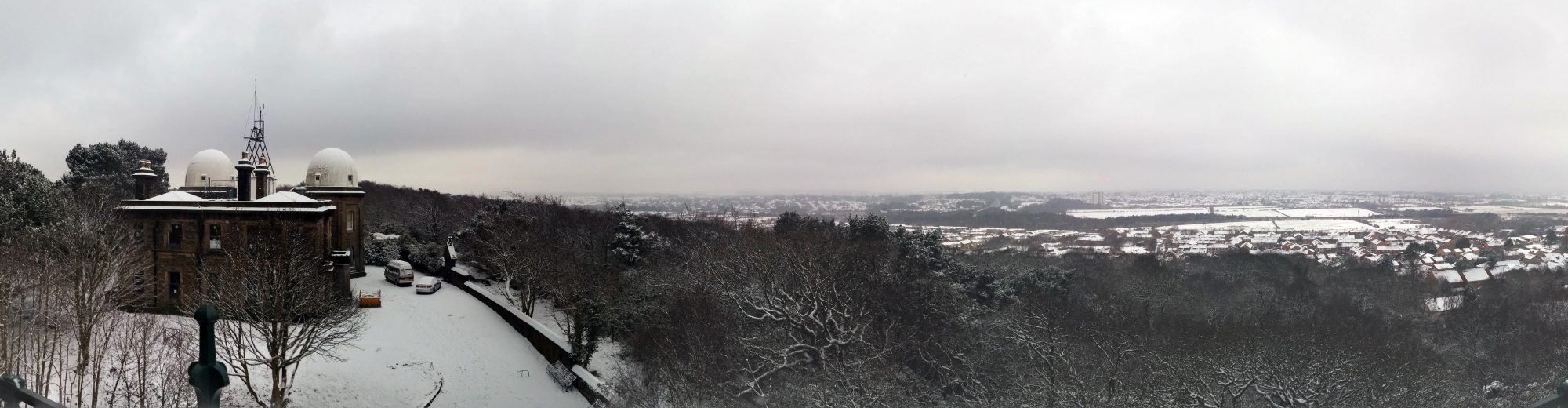
“The lamps are going out all over Europe. We shall not see them lit again in our lifetime”.
Sir Edward Grey, Foreign Secretary, uttered these words on the eve of Britain officially entering the First World War. Exactly 100 years later the British Legion is inviting millions of individuals, households and companies to join together in a national moment of reflection.
Please turn off your lights between 10pm and 11pm on 4 August 2014 – leaving only a single light or candle for this symbolic act of reflection and hope.
We’ll be taking part at Bidston Lighthouse. And we’ll be watching as the lights of Merseyside go out.
Seventy years ago today, the D-Day landings took place.
Let us not forget the role that Bidston Observatory played in the planning of the D-Day invasions. The Observatory’s tide predicting machines — mechanical computers developed since the 1920s by Arthur Doodson and his colleagues — were used to calculate tide tables for the beaches of Normandy and other locations in Northern France.
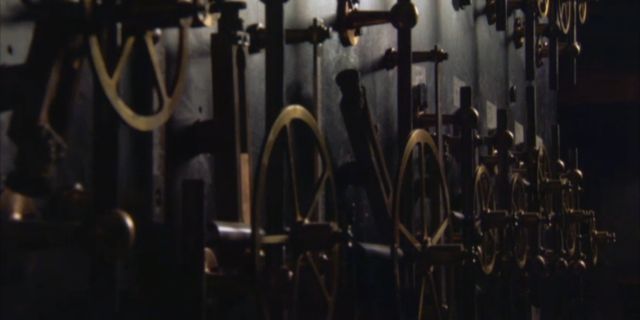
One of Arthur Doodson’s tide predicting machines.
Nor let us forget the staff of the Observatory who operated these machines.
The ladies in this post-war photograph of the Observatory Staff by the One O’Clock gun are, proceeding clockwise from Valerie Doodson at the front left:
Valerie Doodson née Boyes, Jean Harman née MacFarlane, Dorothy Ainsworth, Eunice Murrell née Heath, Barbara Trueman-Jones, Margaret Lennon née Weston, Margaret Ireland née Wylie, Sylvia Asquith née Brooks, and Olwyn Branscombe.
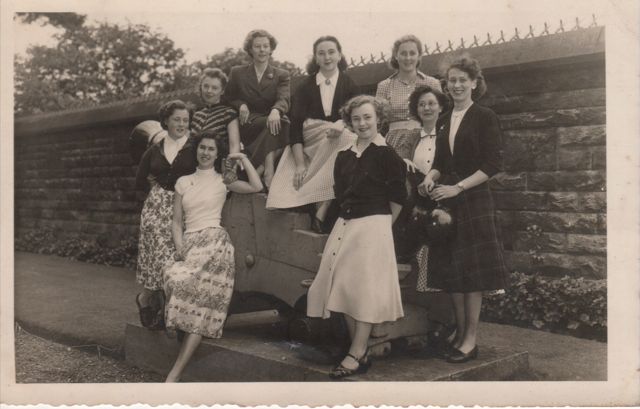
Observatory staff by the one-o-clock gun. Eunice Murrell is the lady at the back.
Eunice Murrell sadly passed away at her home last Saturday, 31 May 2014.
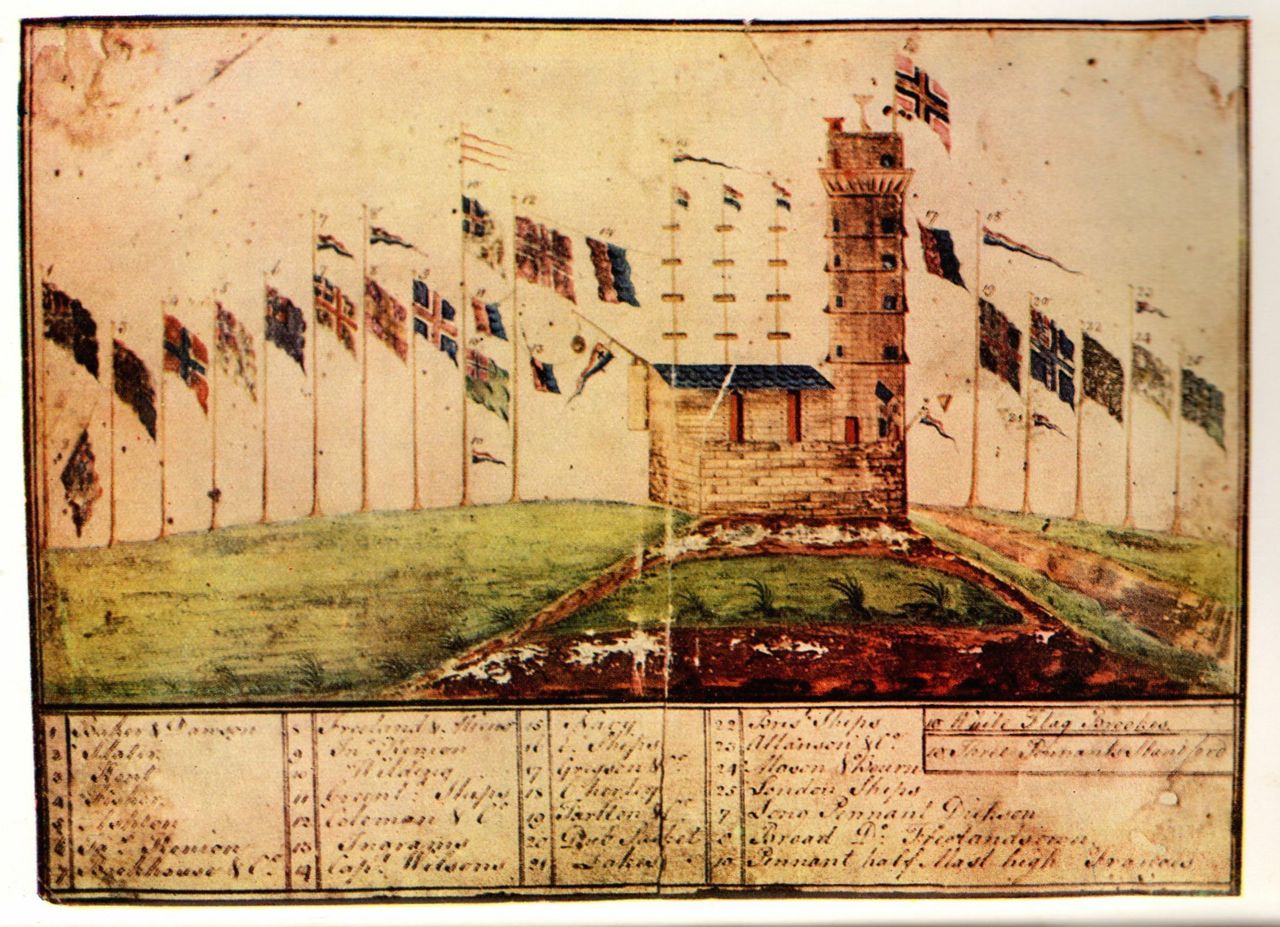
Bidston Signals – early illustration
This delightful illustration of the Bidston Signals was reproduced in “Romance of the Modern Liner”, by Captain E.G. Diggle, 1930. My thanks to Geoff Topp for bringing it to my attention.
Can anyone help with more information about the provenance of the original? Who painted it and when? If so, please comment on this post.
Mary Connell passed away suddenly this morning.
For seventy-seven years, Mary has been a constant presence on the hill that she loved. She moved into the Lighthouse Cottages in 1937 with her parents Mick and Mary Connell and younger sister Patricia. She worked as a funeral director for many years, and walked her dogs on Bidston Hill twice a day. She fought Wirral Borough Council and the Natural Environment Research Council for the right to stay in the Lighthouse Cottages, and against all the odds, she won. She was in her seventies when ill health forced her to retire.
Mary was a strong and feisty woman with a sharp wit and a heart of gold. Bidston Hill will not be the same without her.
Mary is survived by her sister Patricia, her nieces Collette, Paula, Claire and Jane, and her Yorkshire terrier Lacey.
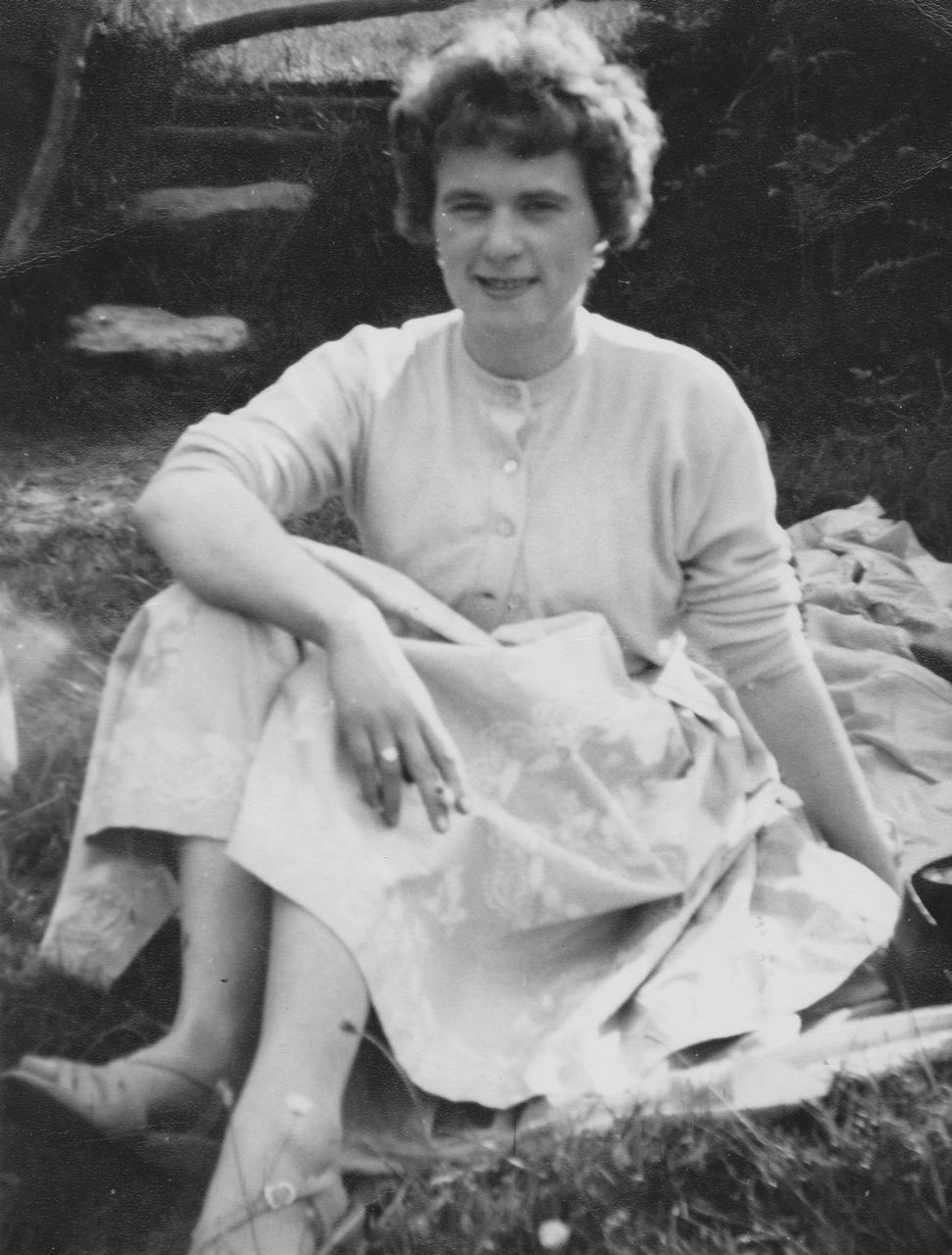
Mary Connell, 1934-2014
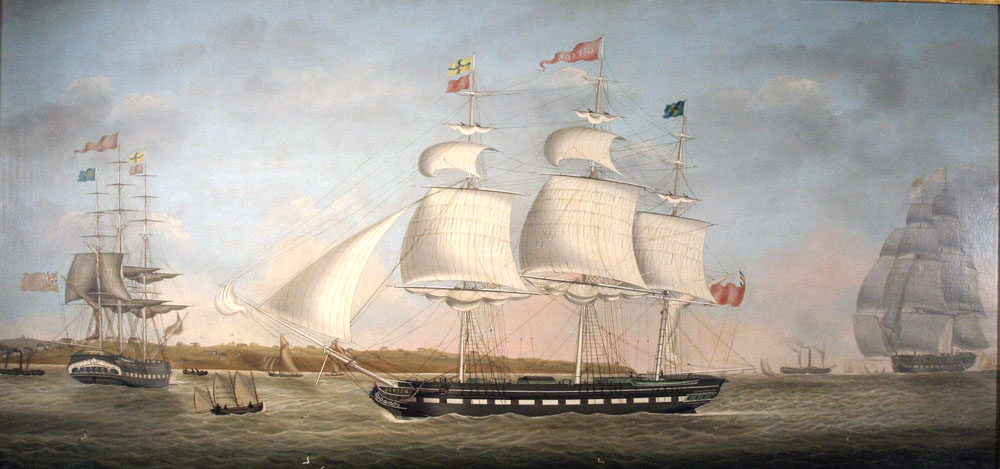
“Gipsey in Three Positions Off Egremont”, Miles Walters, oil on canvas, c. 1828. Image (c) Vallejo Maritime Gallery, Newport Beach, California.
Miles Walters (1773-1849) was born in Ilfracombe, Devon. In his own words “The Artist in his Youthful Days worked in a Mold Loft and has been 13 years at Sea and has painted upwards of 200 Ships in the last Six Years and Sent them to all corners of the World.” He moved to Liverpool some time during the 1820s. Overshadowed by his more famous son Samuel Walters, Miles’ work is characterised by an exceptional attention to detail. His experience as a shipwright and seaman comes through in every line, flag and pennant, and the landmarks in the background of his paintings.
In this painting, the observer is looking across the mouth of the Mersey from Liverpool towards the Wirral peninsula. The ship Gipsey, the subject of the painting, is shown in three different positions. You can just make out Fort Perch Rock in the background, near the base of the rear mast in the central view of the Gipsey. Gipsey was built in 1826, and construction of Fort Perch Rock started in the same year and finished about 1829.
The artist has also taken pains to show Bidston Lighthouse and some of the signal poles that ran the length of Bidston Hill. You can see them clearly in this higher-resolution detail of the extreme left of the painting.
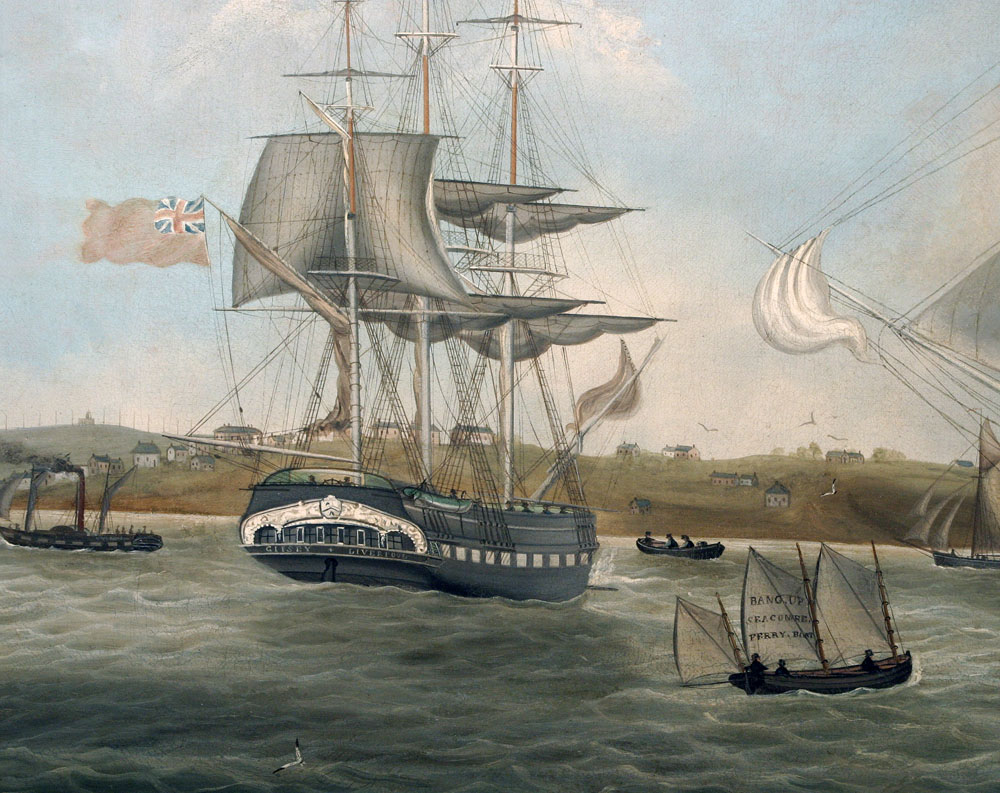
Detail of “Gipsey in Three Positions Off Egremont”, showing Bidston Lighthouse and Signals. Miles Walters, c. 1828. Image (c) Vallejo Maritime Gallery.
I am grateful to Vallejo Maritime Gallery for permission to use these images, and to Colin Dilnot for bringing this wonderful painting to my attention.
The history of Bidston Hill is all about line of sight communications. From Bidston Hill, one can see (and be seen) for many miles in all directions.
Fire Beacons have been deployed on Bidston Hill for centuries. We know they were prepared as part of an early-warning system during the Spanish Armada and again during the Napoleonic Wars. They may have been used even earlier.
In navigation, the Windmill on Bidston Hill was used as a “day mark” long before Wirral’s first lighthouses were built in 1763. This is why many early sea charts of Liverpool Bay took pains to mark the location of Bidston Windmill.
The Bidston Signals comprised more than a hundred “lofty flagstaffs” running along the ridge of Bidston Hill. Their purpose was to give the port of Liverpool notice of arriving ships.
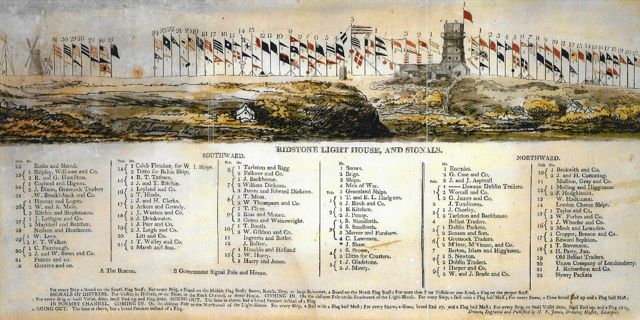
Bidstone Lighthouse and Signals, by Henry F. James, c. 1807. The original is in the collection of the Williamson Art Gallery.
Lighthouses, too, depend on line of sight. To be useful, they must be seen. Liverpool’s first lighthouses were built in Wirral in 1763. These were navigational aids, not warning lights. By setting a course with the two lights straight ahead, mariners avoided the treacherous sand banks of Liverpool Bay. The two Sea Lights, near Leasowe, marked the safe passage through the Horse Channel, and the two Lake Lights marked the way into Hoyle Lake. This was an early (but not the earliest) use of leading lights in navigation.
The first Bidston Lighthouse was built in 1771. It was needed because the lower Sea Light had been overwhelmed by storms. Bidston Lighthouse became the upper Sea Light, and Leasowe Lighthouse, still standing today, became the lower Sea Light. Being 2.3 miles further inland, the new lighthouse depended on a breakthrough in lighthouse optics, which came in the form of William Hutchinson’s invention of the parabolic reflector.
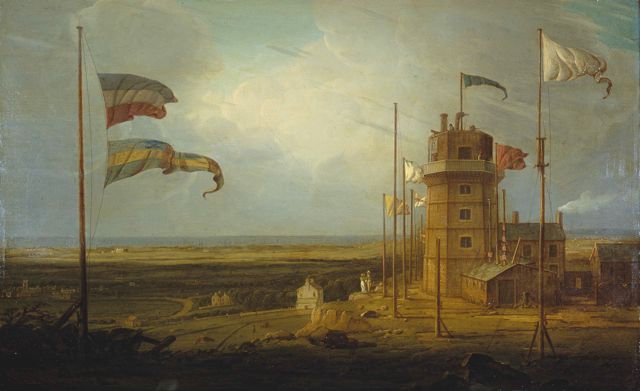
Bidston Lighthouse by Robert Salmon, Oil on Canvas, 1825. Courtesy of National Museums Liverpool.
In 1826, the Liverpool to Holyhead telegraph was set up. This was an optical telegraph, based on a new semaphore system devised by Lieutenant Barnard Lindsay Watson. It comprised a chain of semaphore stations at Liverpool, Bidston Hill, Hilbre Island, Voel Nant, Foryd, Llysfaen, Great Ormes Head, Puffin Island, Point Lynas, Carreglwyd, and Holyhead, a distance of 72 miles. It was capable of relaying a typical message from Holyhead to Liverpool in a few minutes, and a very short message in less than a minute. This was the first telegraph in Britain to carry commercial and private correspondence. Watson’s code was a numeric one: each station in the 1826 telegraph had a massive semaphore mast about 50 feet tall, each pole had three pairs of movable arms, and each pair of arms could signal a single digit. The 1841 telegraph had a two masts each with two pairs of arms, and a larger vocabulary of 10,000 words.
All of these systems were made obsolete by the inexorable march of technology. Last to arrive and first to go was the optical telegraph, which was superseded when the electric telegraph linking Liverpool to Holyhead was finally completed in 1861, the first cables having been laid in 1858. Next to go were the signal flags. The Sea Lights were superseded by navigational buoys, which had the virtue of being moveable. By 1908, when the Lower Sea Light at Leasowe was extinguished, the sandbanks had shifted to such an extent that the Horse and Rock Channels were barely navigable, and the Sea Lights no longer provided a useful leading line. The Upper Sea Light on Bidston Hill shone alone for another five years, until sunrise on 9th October, 1913.
Radio is another form of communications that depends on line of sight. The principle of propagation of electromagnetic waves was discovered by James Clerk Maxwell in 1873, the same year that the present Bidston Lighthouse was completed. Marconi won an important patent in 1896, and built the first radio station on the Isle of Wight in 1897. Then it really took off.
At Bidston Lighthouse (and Bidston Observatory), radio antennae of all kinds have been installed at one time or another. Mersey Docks ordered a set of “Marconi Apparatus” for Bidston Lighthouse as early as 1908, but the Marconi Company failed to deliver, and the order was withdrawn. An antenna, probably marine, is still attached to the north face of the lighthouse tower. Amateur radio enthusiasts, notably the Wirral Amateur Radio Society, still operate from Bidston Lighthouse on annual International Lighthouse and Lightship Weekends, and other special occasions. Our webcam is brought to you over a line-of-sight wireless network. In 2014, Wirral Radio 92.1 FM moved their transmitter to Bidston Lighthouse.
Line-of-sight communications are as much a part of the future of Bidston Lighthouse as its past.
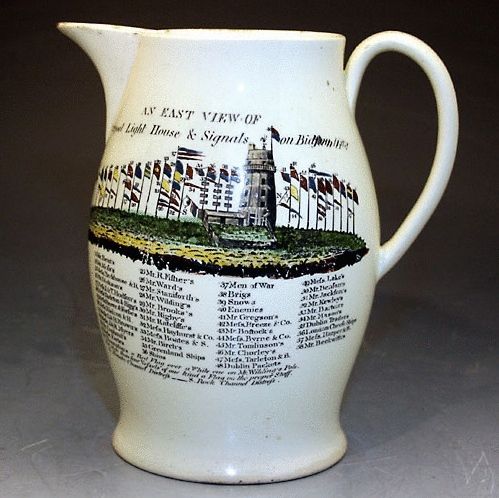
Bidston Signals on ceramic jug
In the twenty first century, we take electronic communications for granted. Most of us can’t remember a time without radio, telephone, and television. Email, text messages, twitter, social networks are part of our daily lives. We’ve almost forgotten about telegrams and fax machines. No-one living today was around when the Bidston Hill Signals were the state of the art in communications.
It is difficult for us to imagine today just how important the Bidston Signals were to the people of Liverpool. News of the imminent of arrival of ships into port was valuable enough to justify building more than one hundred flagpoles along the ridge of Bidston Hill, and paying teams of workers to operate them. Later on, the Liverpool to Holyhead telegraph was established, with pairs of semaphore masts were placed at relay stations on Bidston Hill, Hilbre Island, and so on, all the way to Holyhead. The signals were truly a part of popular culture, and even featured on mundane items of pottery.
What a sight it must have been! This is how Albert Richard Smith described Bidston Hill in 1848, in his book The struggles and adventures of Christopher Tadpole at home and abroad:
But the sight was so riveting that he could not take his eyes from it scarcely, even to notice the lighthouse under whose very walls they passed, with its array of signal-masts that looked as if somebody was either preparing a great display of fireworks, or making ready to set sail and carry the entire hill, lighthouse, telegraph and all, out to sea upon the first fair wind.
“That’s a curious thing,” said Hickory, as he pointed to the telegraph. “I’ve heard there’s people that can read that gibbet just like a book. I never could, not to speak of. I’ve made out a F, and a L, and a E without the middle, and sometimes they was upsy-down. And once I saw it trying uncommon hard to turn itself into a H, but it wasn’t much of a go, not to speak of.”
But most poignant of all perhaps is this account of a sailor’s wife, who looked anxiously to the Bidston Signals for news of her husband:
I have frequently seen a very particular friend of mine, a sailor’s wife, who considers herself, occasionally, the happiest woman in the world, watching the wind, from “sou’ sou’ east—nor’ nor’ east—east and by no’th,” and, with a pair of compasses, leaning over a large chart, endeavouring to trace her husband, by counting the days, and allotting so many degrees of longitude and latitude to each day, to the extent of the voyage; and have whispered to her, in her calculations, “wind and weather permitting.” I have seen this very happy woman pace the room at midnight, if the wind ever attempted to blow from an adverse quarter, and have reasoned with her about
“The sweet little cherub that sits up aloft,
To keep watch for the life of poor Jack”
I have even seen her turn tide-waiter, and count the poles on Bidston Hill, on which a flag on the top announced from the Lighthouse that the expected vessel was in the offing. In another state of her happiness, I have heard her heart beat, when, in looking through the telescope, she dreaded lest, among a sickly and reduced crew, he should not be there; and have been present in another felicitous moment, when the report came, that all was lost, yet was she, occasionally, very happy!
From “Seamen’s Wives”, in SKETCHES IN PROSE AND POETRY, by Katharine Head, Kirkdale, Liverpool, 1837.
The International Lighthouse Passport scheme was launched last year by Lizard Lighthouse Visitor Centre. Similar schemes have proved popular in North America.
Passport holders collect ink stamps from lighthouse visitor centres. Each page has space for one lighthouse stamp and additional notes so that you can also use it to keep a record of your visits.
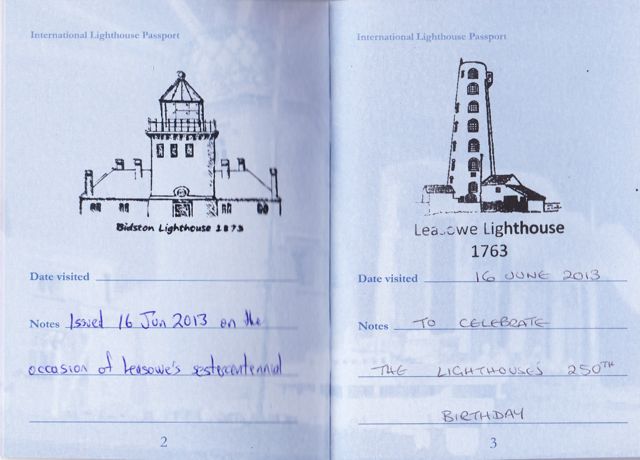
Lighthouse Passport with stamps for Bidston and Leasowe.
In Wirral, Bidston, Leasowe and Hilbre Island Lighthouses all have lighthouse stamps and limited stocks of lighthouse passports for sale.
The Association of Lighthouse Keepers maintain a full list of lighthouses with passport stamps.
The passport stamp for Bidston Lighthouse is based on a line drawing by Phil Ryder. Thanks, Phil.
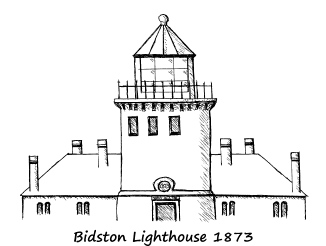
Bidston Lighthouse Passport Stamp