Author Archives: admin

Woodpeckers

We’ve had reports of woodpeckers seen pecking at the metal roof of the lighthouse. This explains the curious sound that we’ve noticed recently, mostly during the early hours of the day, as the dawn chorus gets under way.

Have you seen the woodpeckers?

Do you have a photograph of them?

If you have, please leave a public comment on this post, or send us a private message through our contact form.


Mortimer 1847

Here is an extract from “The History of the Hundred of Wirral”, by William Williams Mortimer, 1847.

Bidston Lighthouse is an object very familiar to the inhabitants of Liverpool, and is one of the localities which command attention, as much from its prominent appearance as its mercantile utility. The Corporation of Liverpool having obtained an Act of Parliament, authorizing the purchase of Bidston Hill and the erection of a Lighthouse upon it, an edifice for that purpose was built in 1771. It consists of a substantial stone building with an octagonal tower, which from a distance has the appearance of a church, and is frequently taken by strangers for one. A long range of poles were formerly placed on the ridge of the hill, on which signals were hoisted to announce to the merchants of Liverpool the approach of their shipping; but the establishment of a line of telegraphs, from that town along the coast of Wales to Holyhead, has nearly superseded the old mode of communication. But as the lights, from their elevated position, are visible for a circle of fourteen miles, and blending with those at Leasowe Lighthouse, point out the entrance into Liverpool, the continuance of the establishment is indispensable for the safety of the numerous shipping trading into that port.

The Lighthouse of Bidston is deserving a visit, and the stranger will be amply gratified, not only with its construction and appendages, but with the varied and extensive prospect which is obtained from a small gallery that projects round the upper storey of the tower, at an elevation of three hundred feet above high-water mark. To the westward, the marshes, a plain of upwards of five hundred acres, on which graze more than a thousand head of cattle, lay extended beneath the eye of the spectator, protected from the inundations of the sea by a range of sandhills and an artificial embankment, which cause the numerous vessels in the Rock Channel to have the appearance of sailing on dry land.


Catoptrics

William Hutchinson, Liverpool Dockmaster, revolutionised lighthouse optics with the introduction of the parabolic reflector. He conducted experiments at the Bidston Signals Station during the 1760s, and subsequently installed reflectors in the Wirral Lighthouses. He writes, in his Treatise on Practical Seamanship:

“We have made, and in use here, at Liverpool, reflectors of one, two, and three feet focus ; and three, five and a half, seven and a half, and twelve feet diameter ; the three smallest being made of tin plates, soldered together ; and the largest of wood, covered with plates of looking glass”.

Hutchinson installed the largest one at Bidston Lighthouse, which was furthest from the sea. The large reflectors had some problems: they used a lot of oil, and smoke from the wick tended to obscure the reflector. Eventually, it was found that several smaller reflectors, arranged so that their beams were parallel, gave an equally bright light and used less oil.

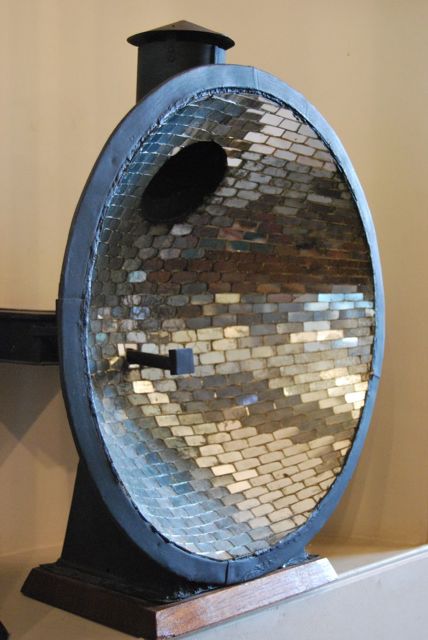
Trinity House have an eighteenth century parabolic reflector in their collection. Its diameter is twenty inches.

18th century catoptric reflector, in the Trinity House collection.

18th century catoptric reflector, in the Trinity House collection. Photograph courtesy of the Corporation of Trinity House.

Little is known about the provenance of this reflector, because, sadly, Trinity House was bombed in 1940, and many of its records destroyed. The reflector will be on display at the National Maritime Museum in Greenwich from March 2014 until January 2016.

Trinity House is 500 years old this year. Henry VIII granted a Royal Charter to Trinity House in 1514.

Most of the lighthouses of Liverpool Bay were built and run by the port of Liverpool, not Trinity House. The Mersey Docks and Harbour Board took over from the Liverpool Dock Trustees in 1858. It was not until 1973 that Trinity House took over Hilbre Island Lighthouse and Point Lynas Lighthouse from the Mersey Docks and Harbour Board.

Catoptric lights are based on the principle of reflection. They were eventually superseded by dioptric lights, based on the principle of refraction, thanks to the work of Augustin-Jean Fresnel. When Bidston Lighthouse was re-built in 1873, it was equipped with a Fresnel lens manufactured by Chance Brothers.

Acknowledgments. My thanks to the Corporation of Trinity House and Neil Jones, Archivist, for permission to use the photograph of the catoptric reflector.

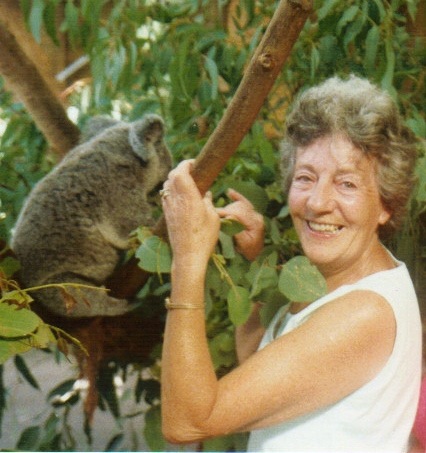
In memoriam Barbara Liptrot

Barbara Liptrot passed away peacefully at 11:45 pm on Sunday 8th December after a long illness.

Her devoted husband Rod and beloved daughter Mandy wish to invite family and friends to her funeral service at Landican Crematorium on Thursday 19th December at noon.

Barbara Liptrot

Barbara Liptrot (1933-2013)

Bidston Observatory – Heritage for Sale

Bidston Observatory is up for sale, again. Here is the listing on RightMove: http://www.rightmove.co.uk/property-for-sale/property-28459380.html

Prospective buyers have only until 30th November to make their “best and final offer”. This seems a little rushed, given that the advert appeared in Wirral News only last week.

I hope the new owners appreciate what an important piece of Merseyside heritage they are taking on.
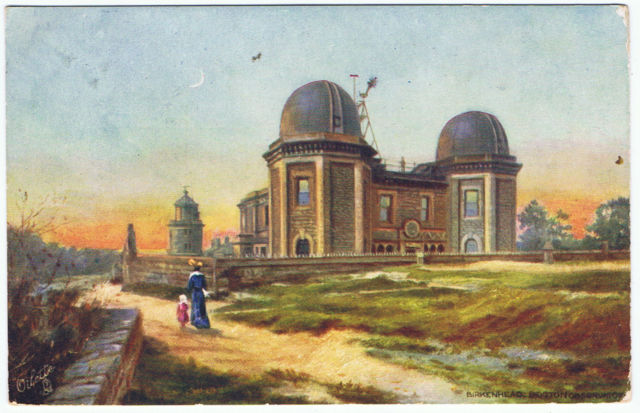
Bidston Observatory and Lighthouse, postmarked 1907

Bidston Observatory and Lighthouse, postmarked 1907

The Observatory was built in 1866, when the expansion of Waterloo Dock forced Liverpool Observatory to re-locate to Bidston Hill. It was built alongside Bidston Lighthouse and Signals Station, on land owned by the Mersey Docks and Harbour Board.  John Hartnup, astronomer and Assistant Secretary to the Royal Astronomical Society, had been the Director of Liverpool Observatory since it was built in 1843. Amongst his achievements was the calculation of the longitude of Liverpool, which was important for navigation and the development of the port. He presided over the move to Bidston Hill, and continued as director of Bidston Observatory until his retirement in 1885, when he was succeeded by his son. The second director, John Hartnup Jr  died on 21 April 1892, when he fell from the roof of the Observatory while making meteorological observations.
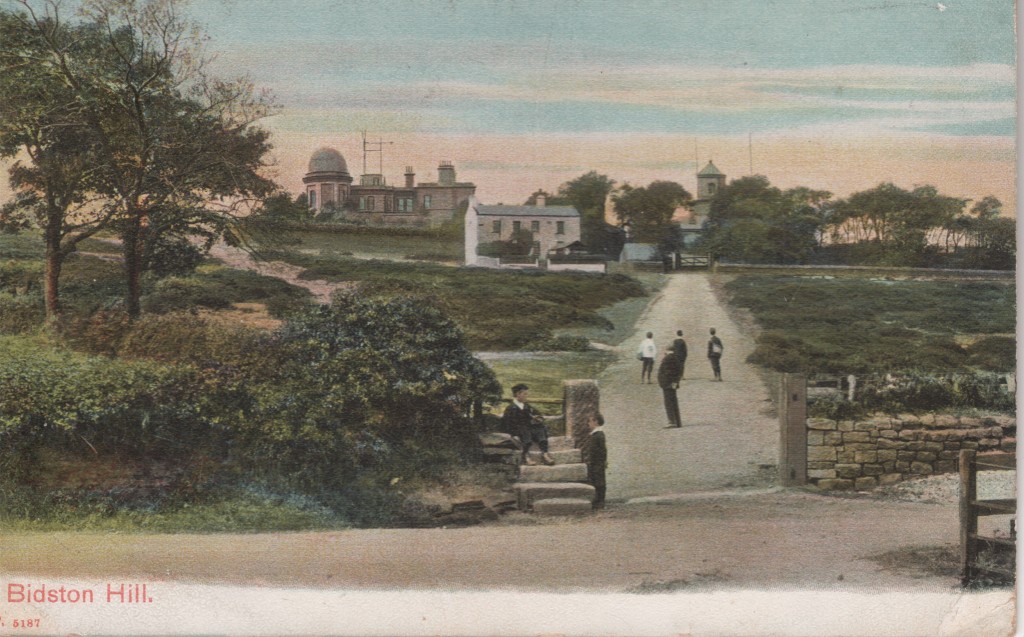
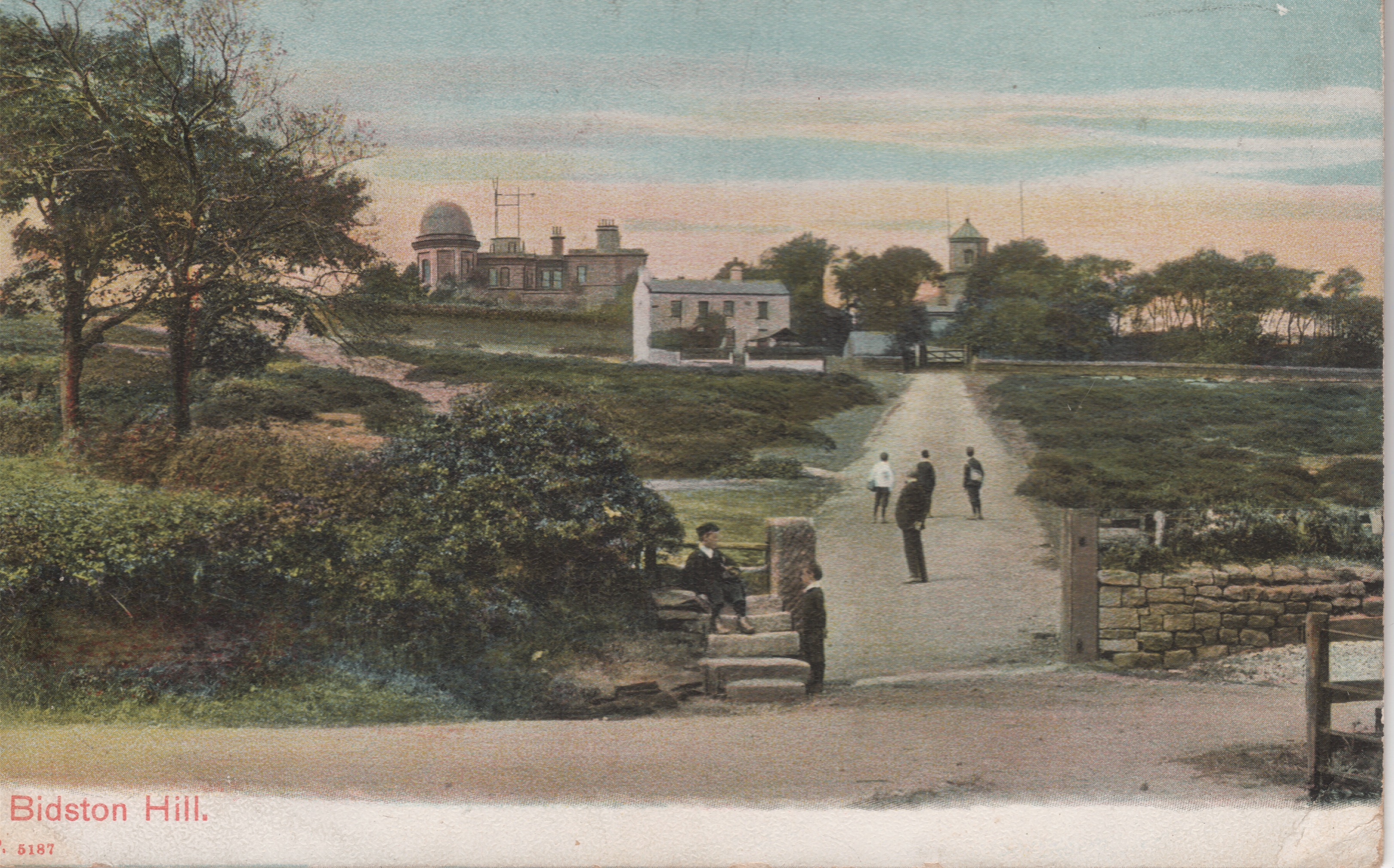
The Observatory, Lighthouse and Braehead Cottage from Boundary Road, postmarked 1909.

The Observatory, Lighthouse and Braehead Cottage from Boundary Road, postmarked 1909.

Over the years, the emphasis of the Observatory’s work shifted from astronomy to other things, but always in the tradition of Time and Tide, so important to the port of Liverpool.

Of Time. The progression from observations of the stars, to the determination of longitude, to the calibration of chronometers was a natural one. The Observatory’s two levels of cellars and other features made it especially suited for calibrating chronometers under controlled conditions of temperature and seismic vibrations. Marine chronometers from all over the empire were calibrated at Bidston. The One-O-Clock gun at Morpeth Dock was signalled from the Observatory by electric cable.

Of Tide. Ever since Liverpool’s harbour-master William Hutchinson (the same fellow who pioneered the use of parabolic reflectors in lighthouses on Bidston Hill) took the first extended series of tidal measurements over a period of nearly thirty years, Liverpool had led the world in tidal studies. This work became centred at Bidston Observatory when the Liverpool Tidal Institute was set up there under Joseph Proudman’s direction after World War I. Arthur Doodson’s work with mechanical computers for tide prediction happened here. One of his machines was used to predict the tides for the D-Day landings.
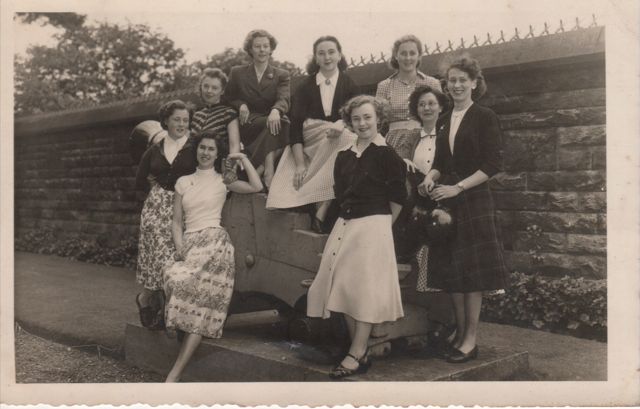
Observatory staff by the one-o-clock gun

Observatory staff by the original one-o-clock gun, after its removal to Bidston Hill from Morpeth Dock.

In 1969, the Natural Environment Research Council (NERC) took over responsibility for the Observatory. Oceanographic research continued to expand under their auspices. During the 1970’s, the Joseph Proudman Building was constructed in the former kitchen gardens of Bidston Lighthouse.

In 1989, the Observatory, Lighthouse and the perimeter wall enclosing them became Grade-II listed buildings.

In 2004, the Proudman Oceanographic Laboratory moved from Bidston Hill to a new building at the University of Liverpool. Their oceanographic research is still continuing today, but now in the guise of the National Oceanography Centre. NERC’s plans to sell the site to a developer aroused opposition from local pressure groups, and the spectre of an eleven-story high-rise residential development was averted.

Bidston Observatory has featured on TV on several occasions, including episodes of Coast (Series 7, Episode 5: “The Riddle of the Tides”), Inside Out, and Where’s Fred. Joyce Scoffield, who used to work in the Observatory, has written a book about it: “Bidston Observatory: The Place and the People”, 2006 (available on Amazon). J. Eric Jones wrote “From Astrononomy to Oceanography – A brief history of Bidston Observatory”, which you can download from the NOC web site.
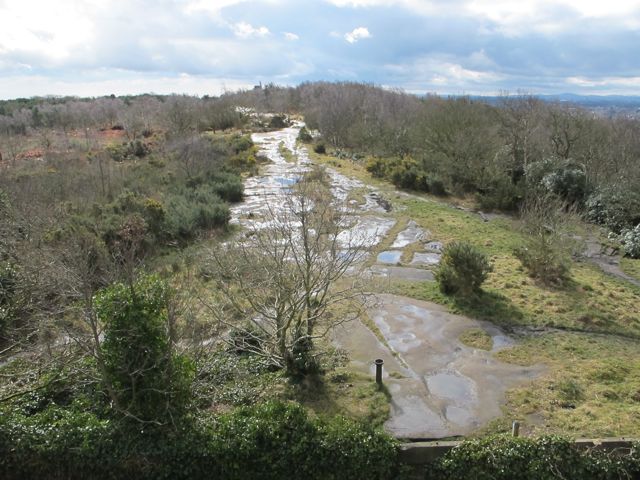
View from Observatory roof, March 2013

View from Observatory roof, March 2013.
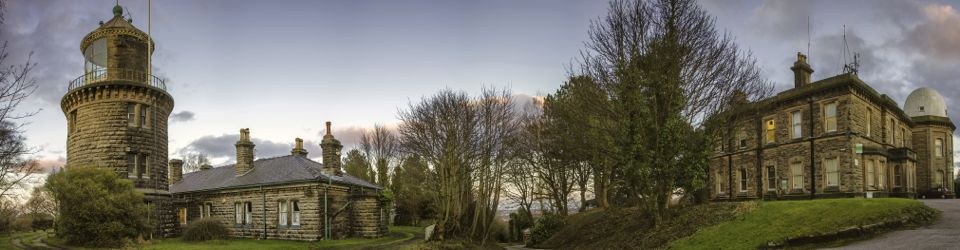
The Scottish Visitor

Robert Stevenson (8 June 1772 – 12 July 1850), the grandfather of the author Robert Louis Stevenson, was a Scottish lighthouse engineer. He built twenty-three lighthouses in Scotland alone, including Bell Rock lighthouse.

In the summer of 1801, Stevenson embarked on an eight-week tour of the English lighthouses. His diary of that journey, along with later trips in 1813 and 1818, was edited by his great-grandson D. Alan Stevenson,  and published by Thomas Nelson and Sons in 1946, under the title “English Lighthouse Tours”.

This is Stevenson’s account of his visit to the Liverpool lighthouses.

From the Isle of Man I went in the Packet to Liverpool, and in my way thence to the lights on the Smalls and at Milford Haven, I took Bidston Hill and Sea Lights, the Lake (Hoylake) lights, Point of Air light and the Skerries light. Bidston Hill and Sea lights are generally termed the Liverpool leading lights ; being so situated that when the mariner brings them to appear as one light he is then in the proper direction for avoiding the sandbanks on taking the channel for Liverpool. The light from Bidston Hill is from oil with one reflector of silvered glass, which is no less than thirteen and a half feet diameter and its focus four feet. This immense reflector is illuminated by one large cotton wick which consumes one gallon of oil in four hours. This lighthouse is remarkable well taken care of — being in every respect clean and in good order. I cannot see any good reason for expending such a quantity of oil for one reflector as the same quantity would answer for thirty reflectors of twenty inches diameter, and I am confident that seven such reflectors would give an equal if not a superior light. Probably it may have been thought, as the light is wanted in the same direction with the rays of the Sea light, that therefore there ought to be but one reflector in each lighthouse. This, however, is proceeding upon a mistake, as seven or greater number of reflectors may be so set that their rays shall have an identical path.

The Sea light is situated near the beach and distant from Bidston Hill lighthouse three miles in a north-west direction. This lighthouse is a huge pile one hundred and thirty-five feet high, and like Bidston, has one reflector of silvered glass seven and a half feet diameter and thirteen inches focal distance. The Lake lights consist of a higher and lower lighthouse with one reflector of silver glass in each, three feet diameter, which are lighted with one wick or torch as in the two lighthouses last described, and are distant from the Sea light about three miles in a south-west direction. The high and low Lake lights are distant from each other about five hundred paces. They are erected for the use of vessels taking Lake Roads when the weather or other circumstances prevent them from getting up to Liverpool. When both lights are seen as one, vessels are then clear of the sandbanks and may stand in for the anchoring ground.

These four lighthouses have been erected by the Trade of Liverpool, under whose management they seem to be conducted with great propriety. At each lighthouse there is one keeper, and although both the Lake reflectors might be kept by one person, yet they prefer two with equal salaries as they are a check upon each other. Besides these, there is a fifth light (supported also by the Trade of Liverpool), namely, Lynas, in the Island of Anglesey, to direct vessels into Beaumaris Bay when put past Liverpool and the Lake roads, but this small light is in use only during the winter months. All of which are instances of a great commercial interest at the Port of Liverpool.

Stevenson was still learning his trade when he wrote this. He has exaggerated the height of Leasowe Lighthouse (which was recorded as 110 feet in contemporary surveys), and the width of Bidston’s reflector (12 feet according to Hutchinson himself, and confirmed by Joseph Cachin’s careful drawing in 1785). His remarks that Bidston would be better served by several smaller reflectors than one big one are correct, but Hutchinson had noted this himself many years earlier.

Fog horns

I’d love to hear the “Foghorn reqiuem” at Souter Lighthouse tomorrow.

Did you know that foghorns owe a lot to Wirral? Modern foghorns rely on the diaphone, which was invented by Robert Hope-Jones. Robert Hope-Jones was born in Hooton, Wirral, in 1859. He was apprenticed at Laird’s shipbuilders in Birkenhead, then set himself up in business making electric organs.

More about the Foghorn Requiem.

Wilding Way

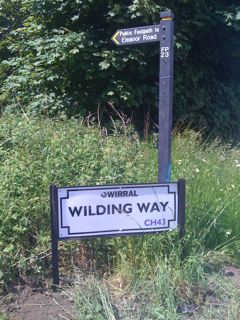
The road from Boundary Road to the Observatory and Lighthouse now has a name! It’s called Wilding Way, in honour of Richard and Elizabeth Wilding, Bidston Hill’s first Lighthouse Keepers.

Road Sign - Wilding Way

Road Sign – Wilding Way

“Wilding Way” has been registered with Wirral Council and Royal Mail. Street nameplates were erected this morning. It will no doubt take some time for the name to percolate through to street atlases, digital maps and the like.

The Wilding family looked after Bidston Lighthouse for nearly a century. The Lighthouse Keepers were: Richard Wilding (abt 1771-1797), his wife Elizabeth Wilding (1797-1800), her son-in-law William Urmson (1800-1835), and his daughter Ann Urmson (1835-1869). I’m still researching the Wilding and Urmson family trees, and will be grateful for any information about them.