Category Archives: News

The Scottish Visitor

Robert Stevenson (8 June 1772 – 12 July 1850), the grandfather of the author Robert Louis Stevenson, was a Scottish lighthouse engineer. He built twenty-three lighthouses in Scotland alone, including Bell Rock lighthouse.

In the summer of 1801, Stevenson embarked on an eight-week tour of the English lighthouses. His diary of that journey, along with later trips in 1813 and 1818, was edited by his great-grandson D. Alan Stevenson,  and published by Thomas Nelson and Sons in 1946, under the title “English Lighthouse Tours”.

This is Stevenson’s account of his visit to the Liverpool lighthouses.

From the Isle of Man I went in the Packet to Liverpool, and in my way thence to the lights on the Smalls and at Milford Haven, I took Bidston Hill and Sea Lights, the Lake (Hoylake) lights, Point of Air light and the Skerries light. Bidston Hill and Sea lights are generally termed the Liverpool leading lights ; being so situated that when the mariner brings them to appear as one light he is then in the proper direction for avoiding the sandbanks on taking the channel for Liverpool. The light from Bidston Hill is from oil with one reflector of silvered glass, which is no less than thirteen and a half feet diameter and its focus four feet. This immense reflector is illuminated by one large cotton wick which consumes one gallon of oil in four hours. This lighthouse is remarkable well taken care of — being in every respect clean and in good order. I cannot see any good reason for expending such a quantity of oil for one reflector as the same quantity would answer for thirty reflectors of twenty inches diameter, and I am confident that seven such reflectors would give an equal if not a superior light. Probably it may have been thought, as the light is wanted in the same direction with the rays of the Sea light, that therefore there ought to be but one reflector in each lighthouse. This, however, is proceeding upon a mistake, as seven or greater number of reflectors may be so set that their rays shall have an identical path.

The Sea light is situated near the beach and distant from Bidston Hill lighthouse three miles in a north-west direction. This lighthouse is a huge pile one hundred and thirty-five feet high, and like Bidston, has one reflector of silvered glass seven and a half feet diameter and thirteen inches focal distance. The Lake lights consist of a higher and lower lighthouse with one reflector of silver glass in each, three feet diameter, which are lighted with one wick or torch as in the two lighthouses last described, and are distant from the Sea light about three miles in a south-west direction. The high and low Lake lights are distant from each other about five hundred paces. They are erected for the use of vessels taking Lake Roads when the weather or other circumstances prevent them from getting up to Liverpool. When both lights are seen as one, vessels are then clear of the sandbanks and may stand in for the anchoring ground.

These four lighthouses have been erected by the Trade of Liverpool, under whose management they seem to be conducted with great propriety. At each lighthouse there is one keeper, and although both the Lake reflectors might be kept by one person, yet they prefer two with equal salaries as they are a check upon each other. Besides these, there is a fifth light (supported also by the Trade of Liverpool), namely, Lynas, in the Island of Anglesey, to direct vessels into Beaumaris Bay when put past Liverpool and the Lake roads, but this small light is in use only during the winter months. All of which are instances of a great commercial interest at the Port of Liverpool.

Stevenson was still learning his trade when he wrote this. He has exaggerated the height of Leasowe Lighthouse (which was recorded as 110 feet in contemporary surveys), and the width of Bidston’s reflector (12 feet according to Hutchinson himself, and confirmed by Joseph Cachin’s careful drawing in 1785). His remarks that Bidston would be better served by several smaller reflectors than one big one are correct, but Hutchinson had noted this himself many years earlier.
Fog horns

I’d love to hear the “Foghorn reqiuem” at Souter Lighthouse tomorrow.

Did you know that foghorns owe a lot to Wirral? Modern foghorns rely on the diaphone, which was invented by Robert Hope-Jones. Robert Hope-Jones was born in Hooton, Wirral, in 1859. He was apprenticed at Laird’s shipbuilders in Birkenhead, then set himself up in business making electric organs.

More about the Foghorn Requiem.

Wilding Way

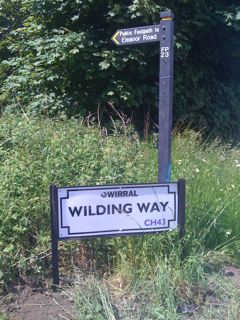
The road from Boundary Road to the Observatory and Lighthouse now has a name! It’s called Wilding Way, in honour of Richard and Elizabeth Wilding, Bidston Hill’s first Lighthouse Keepers.

Road Sign - Wilding Way

Road Sign – Wilding Way

“Wilding Way” has been registered with Wirral Council and Royal Mail. Street nameplates were erected this morning. It will no doubt take some time for the name to percolate through to street atlases, digital maps and the like.

The Wilding family looked after Bidston Lighthouse for nearly a century. The Lighthouse Keepers were: Richard Wilding (abt 1771-1797), his wife Elizabeth Wilding (1797-1800), her son-in-law William Urmson (1800-1835), and his daughter Ann Urmson (1835-1869). I’m still researching the Wilding and Urmson family trees, and will be grateful for any information about them.


A Vision of Biddestone Through Time

Here is a delightful excerpt from A Home Tour through the Manufacturing Districts of England in the Summer of 1835, by George Head (New York: Harper and Brothers, 1836). I found it on that most excellent of websites, “A Vision of Britain Through Time“, which I commend to all local and family historians in need of historical and geographical context for British place names since 1801.

BIDDESTONE LIGHTHOUSE

As I was walking from Woodside towards Biddestone lighthouse, the day being hot, I heard the clattering of hoofs behind me, and was accosted by a little boy, with the offer of a pony. I at first sight thought the whole troop were donkeys; but, on a second glance, I did certainly perceive that one of the quadrupeds really was a pony. The boy had just emerged, with his long-eared squadron, from the village of Biddestone, on his way to Woodside, in order to pick up customers for the day.

The colour of the steed in question was a light sandy dun, a black streak extending the whole length from the withers to the tail; which mark of distinction not only assimilated him to his companions, but, from long habits of intimacy, his manners had become so near akin to theirs, that in reality he was, morally speaking, just as much a jackass as a horse. Such as he was, I immediately engaged his services, upon paying a shilling down, with a promise of more, according to time, on delivery. I was also furnished with a stick into the bargain, which latter I soon found was doomed to more wear and tear in my service than the pony, which was of a nature at all events not to be ridden away with. In a few minutes he was tied up to a rack of hay in a stable belonging to the lighthouse.

Biddestone Hill, about three miles from Woodside, commands an extensive view of the country inland, while the forest of signal poles, with which the lighthouse is surrounded, give it, at a distance, an extraordinary appearance—that of a dock or harbour on the top of a hill. Hence the merchant vessels bound to Liverpool are signalled and telegraphed in the offing, the poles alluded to bearing the private signals of different individuals. And what must be remarked as rather singular is, that, notwithstanding the arduous duty which necessarily falls on the station, the whole is performed, almost exclusively, by young women, daughters of the veteran in charge. The old man, who is thus ably supported in the winter of life, is fourscore years old, and has held the office upward of forty years. Although boys are employed to run backward and forward, out of doors, with colours to the poles, and haul them up; and one of the three young women is married, and occasionally assisted by her husband; yet it is she who, being perfect in the whole code of signals, performs the responsible part of the duty. This couple were both at work together at the time I arrived, the young woman keeping the lookout, and calling the numbers, while the man, merely at her bidding, pulled the ropes. She not only kept him employed, but managed meanwhile to iron a shirt into the bargain.

The business of the youngest sister is to attend the light, consisting of eleven Argand lamps, with plated reflectors. Every four hours during the night the lamps are trimmed; these, the stove, copper, oil jars, and paved floor, are preserved in a state of cleanliness not to be exceeded; while no doubt, many a mariner, on a wintry and stormy night, both knows and feels that his life and safety are thus well confided to the never-failing care of — woman.

The old man is William Urmson, who died later that very year. The three women were the surviving daughters of his second wife:  Ann (who was to succeed William as keeper), Catherine (the youngest), and Jane, wife of Thomas Nichols, the Telegraph Keeper.

It’s interesting to note that the single massive reflector of 1771 has been replaced by 11 smaller reflectors. Both William Hutchinson himself (in his Treatise of Practical Seamanship), and later, Robert Stevenson (the Scottish lighthouse engineer who visited in 1801), recommended multiple smaller reflectors instead of a single big one.

Dutch visitors

Recently, a Dutch gentleman, whom we shall call Jan VIII, visited Leasowe and Bidston Lighthouses. I hope Jan VIII and his gracious wife will forgive me for greeting them with a paintbrush in hand.

Jan VIII was retracing the footsteps of his ancestor, Jan van Heukelom (1784-1847). The elder Jan, whom we shall call Jan IV, visited England in 1805 and kept a detailed journal of his travels. These were interesting times. England was at war with France, alarm beacons were erected on Bidston Hill in April, and the Battle of Trafalgar was fought on 21st October.

Here is an extract from Jan IV’s journal entry for Monday 16 September, 1805, when he paid a visit to Bidston Lighthouse. My thanks go to Jan VIII for sharing his annotated transcription, and to Woutera Willemsen for translating this passage from the Dutch.

“I then crossed the Mersey in a boat with Rogers and walked to the lighthouse with him. It is but a kind of tower, with a room containing the light for the ships to navigate by when sailing into the channel. The light is a cotton lamp wick supplied by oil placed in front of an enormous reflector. This reflector is, I noticed, in the shape of a parabola and the lamp is in its focus. The largest circle must be approximately 18 feet wide and the reflector is made up of trapezia of mirror glass. The front of the room in which the lamp is located is entirely made of glass, which means the light can be seen freely. Closer to sea there is another smaller and lower beacon. The helmsmen must keep these two lights in a straight line in a certain position in the channel. These circumstances, which the caretaker informed me of and his statement that the light was by far not as visible from the side as from the front, strengthened my thoughts concerning the parabolic nature of the reflector. This lighthouse can be seen clearly from Liverpool. The pilots used this circumstance by placing a number of signal poles close to the lighthouse. As soon as a ship arrives from sea and comes within sight of this beacon, it will hoist its private flag from which the caretaker will recognize the owner. The caretaker will then go and hoist the owner’s flag on the designated pole while a general sign will show what kind of ship it is. This is how the Liverpool merchants (want to) know what is happening at sea close by. When we arrived back from the lighthouse, we just had time to dine after our crossing, which seemed to last a long time to me. Afterwards, I dressed and went to the theatre with Mr Tait and company.”

Jan IV used the English terms for “lighthouse” and “signal poles”, and the French “reverbère” for “reflector”.

May Day Morris Dancing

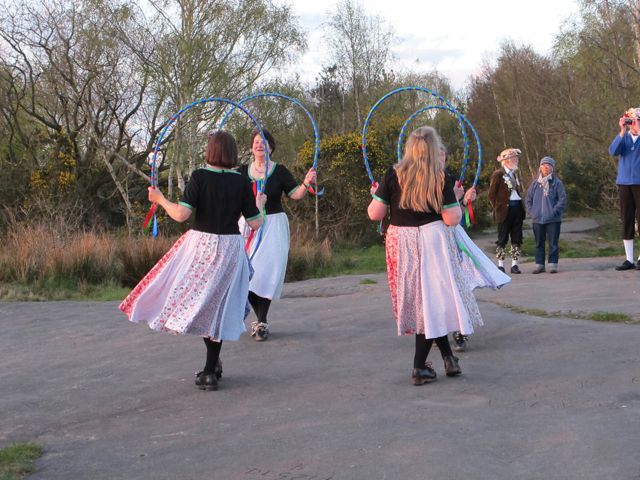
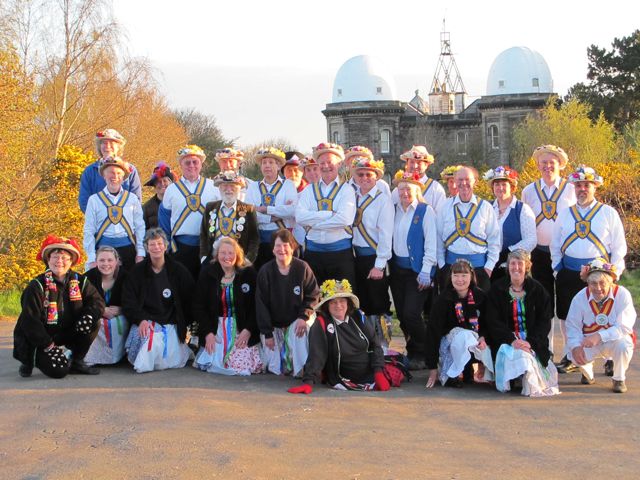
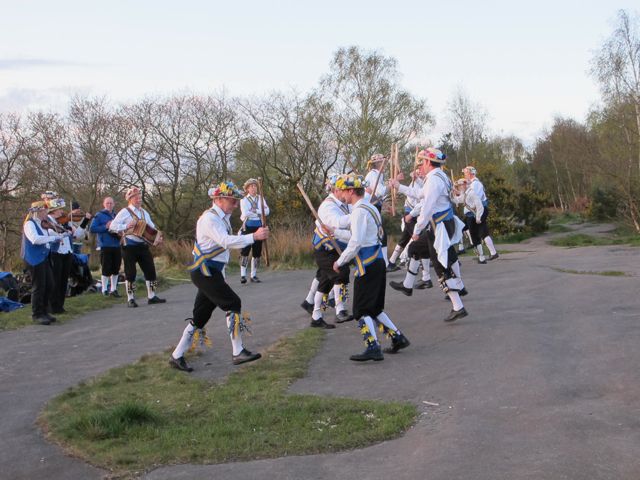
The Mersey Morris Men and the Mockbeggar Morris danced at dawn on Bidston Hill this morning. They, along with other Morris sides around the country, dance the sun up every May Day. It’s worth getting out of bed for!

Did you know that where the Mockbeggar Morris danced this morning is very close to the Upper Mockbeggar Light? Or that the Mockbeggar Morris might be dancing at the Lower Mockbeggar Light in a few weeks’ time? Let me explain.

In 1763, 250 years ago, two lighthouses were built at Leasowe to light the safe passage through the Horse Channel. These leading lights were known at the time variously as the Mockbeggar Lights (because of their location on Mockbeggar Wharf) and the Sea Lights (to distinguish them from the Lake Lights, which marked the channel to Hoyle Lake). A few years later in 1771, the Lower Mockbeggar Light having been destroyed by storms, a new lighthouse was built on Bidston Hill in the same alignment. This became the Upper Light, and Leasowe Lighthouse, formerly the Upper Light, became the Lower Light.

We hope that the Mockbeggar Morris will be able to perform at Leasowe Lighthouse’s sestercentennical celebrations on Sunday June 16th (Father’s Day) this year.

Mersey Morris Men

Mersey Morris Men

Mockbeggar Morris

Mockbeggar Morris

Morris Dancers

Morris Dancers by Bidston Observatory

Dust to Dust

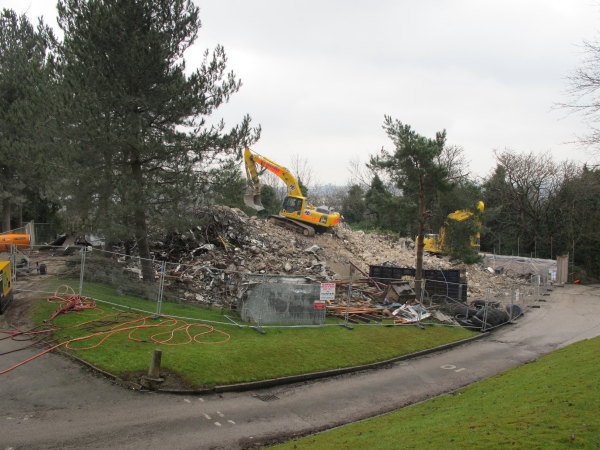
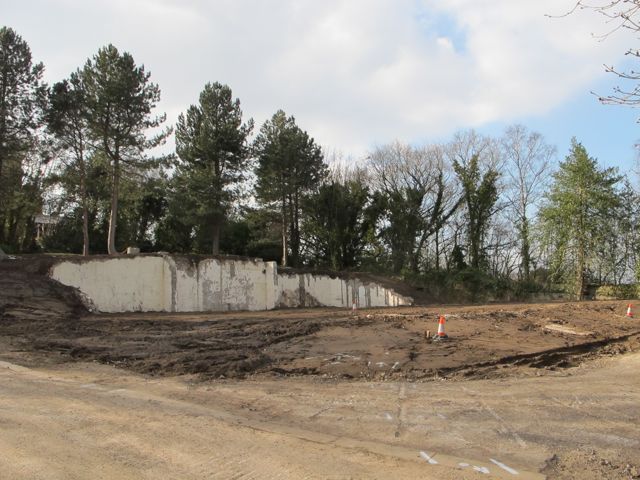
The Joseph Proudman Building has been reduced to rubble. I’ve posted a time-lapse video of how it happened.

Joseph Proudman Building reduced to Rubble

Joseph Proudman Building reduced to rubble

For a while, during a spell of dry weather, the lighthouse and cottages were covered in a blanket of dust — fine, sticky stuff composed of powdered concrete and who-knows-what that blew off the demolition site, turning our hair to straw and leaving a gritty taste in our mouths. When we complained, the demolition contractors promptly deployed a “dust reduction unit”, which sprayed a mist of water into the air, stopped most of the dust from blowing over us, and made our breathing easier. Eventually the rains should wash away the dust that remains. We had been worried about the effect the dust was having on the vegetation. But this morning, we saw the crocuses in bloom, a little late in the season, but apparently healthy.

Soon it will be all over, and we’ll be waking up to the sound of birdsong instead of the rumble of heavy machinery.

One evening a couple of weeks ago, we noticed from our dining room window some pretty lights twinkling through the trees to the east. We hadn’t seen these before, and wondered what they were. Then it dawned on us that we were looking at the lights of Liverpool at night. We will not miss the Joseph Proudman Building.

People keep asking me what will happen next. In the short term, the site will be landscaped and new grass will be sown. In the longer term, we can only guess. We know that NERC want to dispose of their property on Bidston Hill. This includes the Observatory, the site of the former Braehead Cottage, and the leasehold of the site of the former Joseph Proudman Building (Wirral Borough Council own the freehold).

Meanwhile, Wirral Council’s “Interim Planning Policy” precludes new residences on Bidston Hill. While this is in force, I can’t see planning permission being granted for a residential development on either the Braehead Cottage or Proudman site. Presumably, it would be possible to obtain planning permission for a new research facility or office space on the Proudman site, but this does not seem likely — the location is too remote and the network infrastructure is too poor to make a good location for offices

However, Councils are fickle creatures, and Wirral Borough Council, like every other local council in the country, is under severe financial pressure and this shows no signs of letting up. The Council could benefit financially by selling the freehold of the Proudman site to a developer, and the only thing standing in its way is its self-inflicted Interim Planning Policy.

So it’s probably only a matter of time before the council revises its planning policy to suit itself, and the Proudman site is sold to a developer. We have to hope that what’s put in its place is in keeping with the Observatory, Lighthouse and Bidston Hill. A residential development comprising a couple of sandstone cottages might be a satisfactory outcome.  An eleven storey high-rise would not (although plans for such a monstrosity were actually drawn up only a few years ago).

I’d quite like to see the land dedicated as a public park, with a few benches and tables for picnics, and perhaps a visitors’ centre or ranger’s hut. This would be consistent with the spirit in which Mersey Docks and Harbour Board originally sold the Lighthouse site (including what is now the Proudman land) to the Birkenhead Corporation back in the 1930s for the greatly discounted price of one thousand pounds, on the understanding that it would be used for the recreation of the people of Birkenhead. Incidentally, there is in the document that conveyed the land to the Birkenhead Corporation a covenant forbidding the erection of new buildings. But that covenant did not stop the construction of the Joseph Proudman Building…

After the demolition of the Joseph Proudman Building

After the demolition of the Joseph Proudman Building

Antarctica, Floods and Bidston Hill

Last week, BBC news reported on a new measurement of the volume of ice in Antarctica, from the Bedmap2 project. The potential sea level equivalent of the Antarctic ice volume is 58 metres. What does this mean? The BBC article explains: “if this ice was all converted to liquid water, it would be sufficient to raise the height of the world’s oceans by 58m”.

I did my own “back of the envelope” calculation using the Bedmap2 numbers (and a few guesses and approximations), and came up with a figure of about 60 metres, close enough to convince me that the BBC explanation of “potential sea level equivalent” is correct. I suspect the actual sea rise would be slightly less, because some of the water would inundate coastal regions, making the oceans larger, not just deeper. Still, 58 metres is a lot.

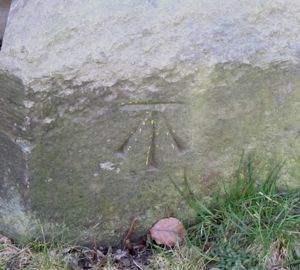
Ordnance Survey cut benchmark on Bidston Lighthouse

Ordnance Survey cut benchmark on Bidston Lighthouse

Something about 58 metres rang a bell. Then I remembered the Ordnance Survey benchmark cut into the base of the Lighthouse, near the front door. (The first time I saw this, I mistook it for a mason’s mark. It was a surveyor who explained its significance to me.)

As I reported in an earlier post, the horizontal line at the top of the benchmark is 58.9727 metres (or thereabouts) above mean sea level at Newlyn, Cornwall. So if Antarctica melted, the sea would be lapping at the foot of the Lighthouse, and Bidston Hill would be an island.

We could buy a boat, and invest in a new dioptric lamp in case the Lighthouse is needed again. But surely it’s better to do our bit towards reducing carbon dioxide emissions, and invest instead in solar panels (assuming we can obtain planning permission and listed buildings consent).

There’s another connection between Antarctica and Bidston Hill. NERC, which used to own the Lighthouse and still owns the Observatory, is the research council that funds both the British Antarctic Survey and the National Oceanography Centre. It’s only a few months since the proposed merger of the British Antarctic Survey with the National Oceanography Centre was averted.