Category Archives: News

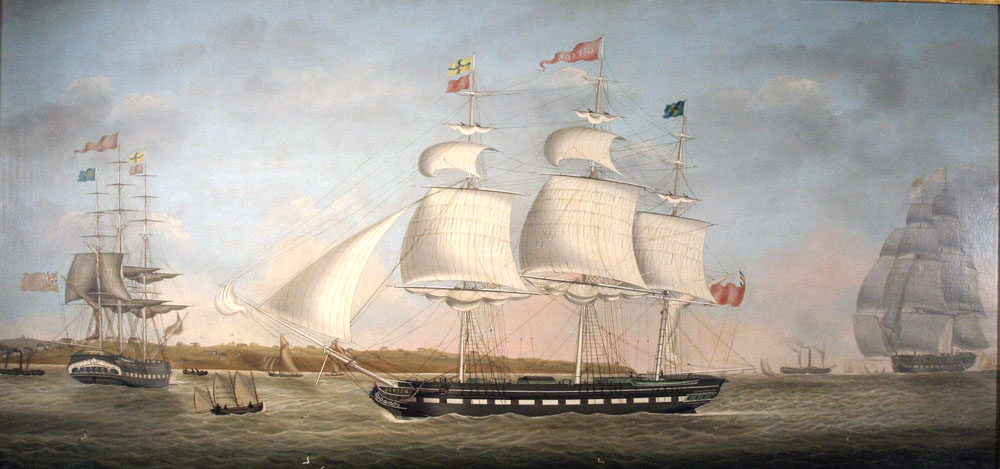
Gipsey in Three Positions Off Egremont

"Gipsey in Three Positions Off Egremont", Miles Walters, oil on canvas, c. 1828. Image courtesy Vallejo Maritime Gallery, Newport Beach, California.

“Gipsey in Three Positions Off Egremont”, Miles Walters, oil on canvas, c. 1828. Image (c) Vallejo Maritime Gallery, Newport Beach, California.

Miles Walters (1773-1849) was born in Ilfracombe, Devon. In his own words “The Artist in his Youthful Days worked in a Mold Loft and has been 13 years at Sea and has painted upwards of 200 Ships in the last Six Years and Sent them to all corners of the World.” He moved to Liverpool some time during the 1820s. Overshadowed by his more famous son Samuel Walters, Miles’ work is characterised by an exceptional attention to detail. His experience as a shipwright and seaman comes through in every line, flag and pennant, and the landmarks in the background of his paintings.

In this painting, the observer is looking across the mouth of the Mersey from Liverpool towards the Wirral peninsula. The ship Gipsey, the subject of the painting, is shown in three different positions. You can just make out Fort Perch Rock in the background, near the base of the rear mast in the central view of the Gipsey. Gipsey was built in 1826, and construction of Fort Perch Rock started in the same year and finished about 1829.

The artist has also taken pains to show Bidston Lighthouse and some of the signal poles that ran the length of Bidston Hill. You can see them clearly in this higher-resolution detail of the extreme left of the painting.
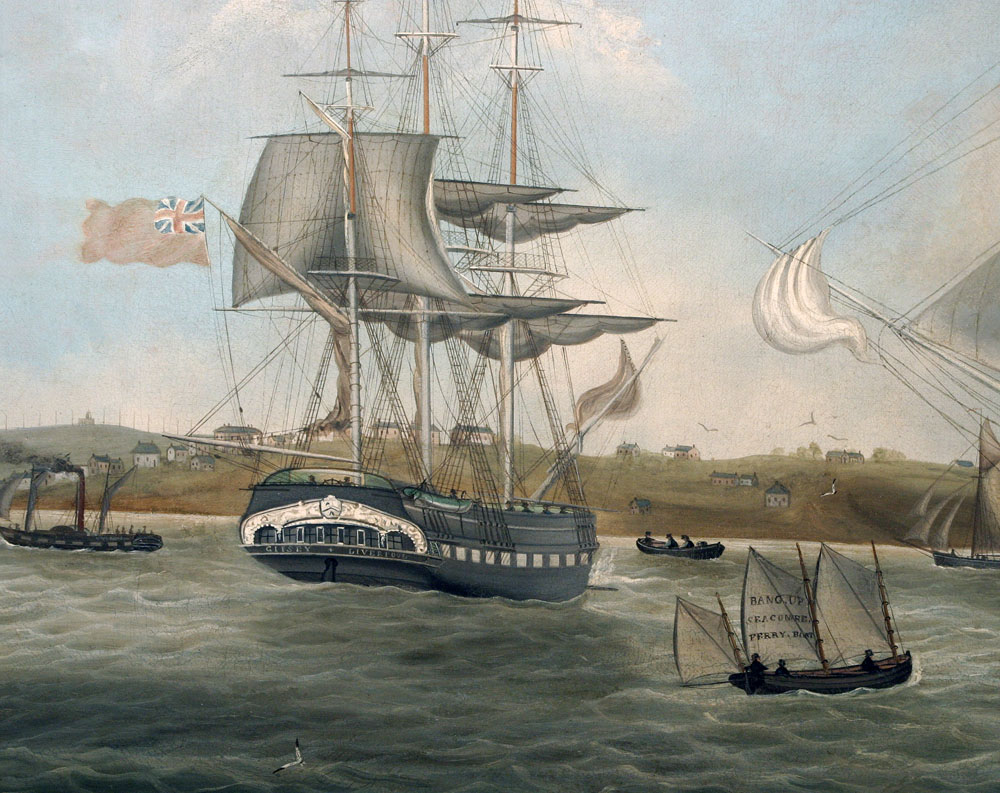
Detail showing Bidston Signals.

Detail of “Gipsey in Three Positions Off Egremont”, showing Bidston Lighthouse and Signals. Miles Walters, c. 1828. Image (c) Vallejo Maritime Gallery.

I am grateful to Vallejo Maritime Gallery for permission to use these images, and to Colin Dilnot for bringing this wonderful painting to my attention.

Further reading

  • “Marine Art & Liverpool: Painters, Places & Flag Codes 1760-1960″, A. S. Davidson, Waine Research Publications, 1986, ISBN 0 905184 10 6.
Lines of Sight

The history of Bidston Hill is all about line of sight communications. From Bidston Hill, one can see (and be seen) for many miles in all directions.

Fire Beacons have been deployed on Bidston Hill for centuries. We know they were prepared as part of an early-warning system during the Spanish Armada and again during the Napoleonic Wars. They may have been used even earlier.

In navigation, the Windmill on Bidston Hill was used as a “day mark” long before Wirral’s first lighthouses were built in 1763. This is why many early sea charts of Liverpool Bay took pains to mark the location of Bidston Windmill.

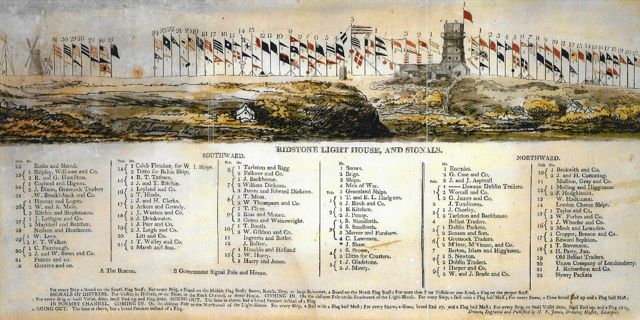
The Bidston Signals comprised more than a hundred “lofty flagstaffs” running along the ridge of Bidston Hill. Their purpose was to give the port of Liverpool notice of arriving ships.

Bidstone Lighthouse and Signal

Bidstone Lighthouse and Signals, by Henry F. James, c. 1807. The original is in the collection of the Williamson Art Gallery.

Lighthouses, too, depend on line of sight. To be useful, they must be seen. Liverpool’s first lighthouses were built in Wirral in 1763. These were navigational aids, not warning lights. By setting a course with the two lights straight ahead, mariners avoided the treacherous sand banks of Liverpool Bay. The two Sea Lights, near Leasowe, marked the safe passage through the Horse Channel, and the two Lake Lights marked the way into Hoyle Lake. This was an early (but not the earliest) use of leading lights in navigation.

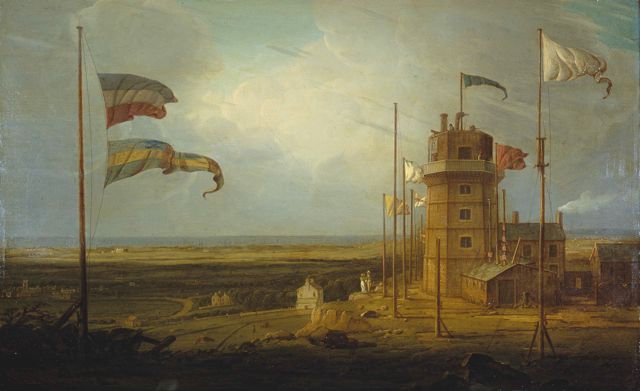
The first Bidston Lighthouse was built in 1771. It was needed because the lower Sea Light had been overwhelmed by storms. Bidston Lighthouse became the upper Sea Light, and Leasowe Lighthouse, still standing today, became the lower Sea Light. Being 2.3 miles further inland, the new lighthouse depended on a breakthrough in lighthouse optics, which came in the form of William Hutchinson’s invention of the parabolic reflector.

Bidston Lighthouse by Robert Salmon, Oil on Canvas, 1825. Courtesy of National Museums Liverpool.

Bidston Lighthouse by Robert Salmon, Oil on Canvas, 1825. Courtesy of National Museums Liverpool.

In 1826, the Liverpool to Holyhead telegraph was set up. This was an optical telegraph, based on a new semaphore system devised by Lieutenant Barnard Lindsay Watson. It comprised a chain of semaphore stations at Liverpool, Bidston Hill, Hilbre Island, Voel Nant, Foryd, Llysfaen, Great Ormes Head, Puffin Island, Point Lynas, Carreglwyd, and Holyhead, a distance of 72 miles.  It was capable of relaying a typical message from Holyhead to Liverpool in a few minutes, and a very short message in less than a minute. This was the first telegraph in Britain to carry commercial and private correspondence. Watson’s code was a numeric one: each station in the 1826 telegraph had a massive semaphore mast about 50 feet tall, each pole had three pairs of movable arms, and each pair of arms could signal a single digit. The 1841 telegraph had a two masts each with two pairs of arms, and a larger vocabulary of 10,000 words.

All of these systems were made obsolete by the inexorable march of technology. Last to arrive and first to go was the optical telegraph,  which was superseded when the electric telegraph linking Liverpool to Holyhead was finally completed in 1861, the first cables having been laid in 1858. Next to go were the signal flags. The Sea Lights were superseded by navigational buoys, which had the virtue of being moveable. By 1908, when the Lower Sea Light at Leasowe was extinguished, the sandbanks had shifted to such an extent that the Horse and Rock Channels were barely navigable, and the Sea Lights no longer provided a useful leading line. The Upper Sea Light on Bidston Hill shone alone for another five years, until sunrise on 9th October, 1913.

Radio is another form of communications that depends on line of sight. The principle of propagation of electromagnetic waves was discovered by James Clerk Maxwell in 1873, the same year that the present Bidston Lighthouse was completed. Marconi won an important patent in 1896, and built the first radio station on the Isle of Wight in 1897. Then it really took off.

At Bidston Lighthouse (and Bidston Observatory), radio antennae of all kinds have been installed at one time or another. Mersey Docks ordered a set of “Marconi Apparatus” for Bidston Lighthouse as early as 1908, but the Marconi Company failed to deliver, and the order was withdrawn. An antenna, probably marine, is still attached to the north face of the lighthouse tower. Amateur radio enthusiasts, notably the Wirral Amateur Radio Society, still operate from Bidston Lighthouse on annual International Lighthouse and Lightship Weekends, and other special occasions. Our webcam is brought to you over a line-of-sight wireless network. In 2014, Wirral Radio 92.1 FM moved their transmitter to Bidston Lighthouse.

Line-of-sight communications are as much a part of the future of Bidston Lighthouse as its past.

Seamen’s Wives

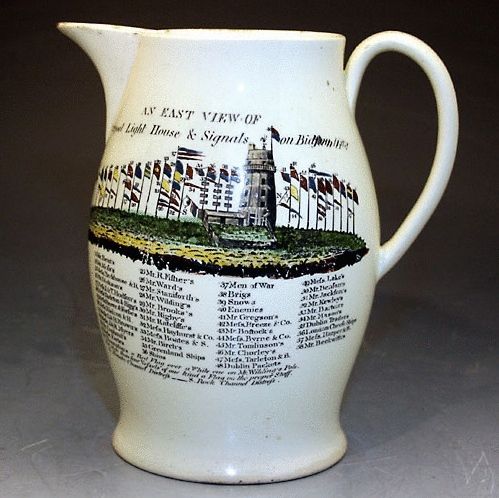
Bidston Signals on ceramic jug

Bidston Signals on ceramic jug

In the twenty first century, we take electronic communications for granted. Most of us can’t remember a time without radio, telephone, and television. Email, text messages, twitter, social networks are part of our daily lives. We’ve almost forgotten about telegrams and fax machines. No-one living today was around when the Bidston Hill Signals were the state of the art in communications.

It is difficult for us to imagine today just how important the Bidston Signals were to the people of Liverpool. News of the imminent of arrival of ships into port was valuable enough to justify building more than one hundred flagpoles along the ridge of Bidston Hill, and paying teams of workers to operate them. Later on, the Liverpool to Holyhead telegraph was established, with pairs of semaphore masts were placed at relay stations on Bidston Hill, Hilbre Island, and so on, all the way to Holyhead. The signals were truly a part of popular culture, and even featured on mundane items of pottery.

What a sight it must have been! This is how Albert Richard Smith described Bidston Hill in 1848, in his book The struggles and adventures of Christopher Tadpole at home and abroad:

But the sight was so riveting that he could not take his eyes from it scarcely, even to notice the lighthouse under whose very walls they passed, with its array of signal-masts that looked as if somebody was either preparing a great display of fireworks, or making ready to set sail and carry the entire hill, lighthouse, telegraph and all, out to sea upon the first fair wind.

“That’s a curious thing,” said Hickory, as he pointed to the telegraph. “I’ve heard there’s people that can read that gibbet just like a book. I never could, not to speak of. I’ve made out a F, and a L, and a E without the middle, and sometimes they was upsy-down. And once I saw it trying uncommon hard to turn itself into a H, but it wasn’t much of a go, not to speak of.”

But most poignant of all perhaps is this account of a sailor’s wife, who looked anxiously to the Bidston Signals for news of her husband:

I have frequently seen a very particular friend of mine, a sailor’s wife, who considers herself, occasionally, the happiest woman in the world, watching the wind, from “sou’ sou’ east—nor’ nor’ east—east and by no’th,” and, with a pair of compasses, leaning over a large chart, endeavouring to trace her husband, by counting the days, and allotting so many degrees of longitude and latitude to each day, to the extent of the voyage; and have whispered to her, in her calculations, “wind and weather permitting.” I have seen this very happy woman pace the room at midnight, if the wind ever attempted to blow from an adverse quarter, and have reasoned with her about

“The sweet little cherub that sits up aloft,
To keep watch for the life of poor Jack”

I have even seen her turn tide-waiter, and count the poles on Bidston Hill, on which a flag on the top announced from the Lighthouse that the expected vessel was in the offing. In another state of her happiness, I have heard her heart beat, when, in looking through the telescope, she dreaded lest, among a sickly and reduced crew, he should not be there; and have been present in another felicitous moment, when the report came, that all was lost, yet was she, occasionally, very happy!

From “Seamen’s Wives”,  in SKETCHES IN PROSE AND POETRY, by Katharine Head, Kirkdale, Liverpool, 1837.

Lighthouse Passports

The International Lighthouse Passport scheme was launched last year by Lizard Lighthouse Visitor Centre. Similar schemes have proved popular in North America.

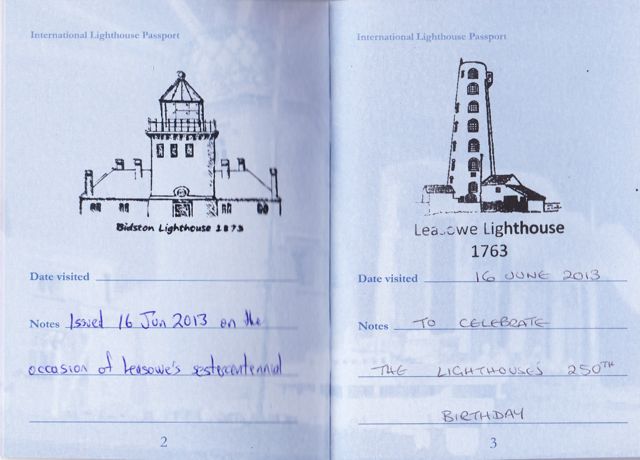
Passport holders collect ink stamps from lighthouse visitor centres. Each page has space for one lighthouse stamp and additional notes so that you can also use it to keep a record of your visits.

Lighthouse Passport with stamps for Bidston and Leasowe.

Lighthouse Passport with stamps for Bidston and Leasowe.

In Wirral, Bidston, Leasowe and Hilbre Island Lighthouses all have lighthouse stamps and limited stocks of lighthouse passports for sale.

The Association of Lighthouse Keepers maintain a full list of lighthouses with passport stamps.

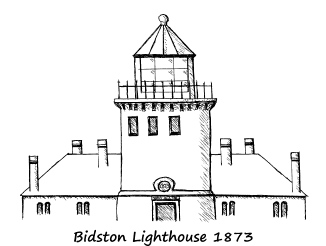
The passport stamp for Bidston Lighthouse is based on a line drawing by Phil Ryder. Thanks, Phil.

Bidston Lighthouse Passport Stamp

Bidston Lighthouse Passport Stamp

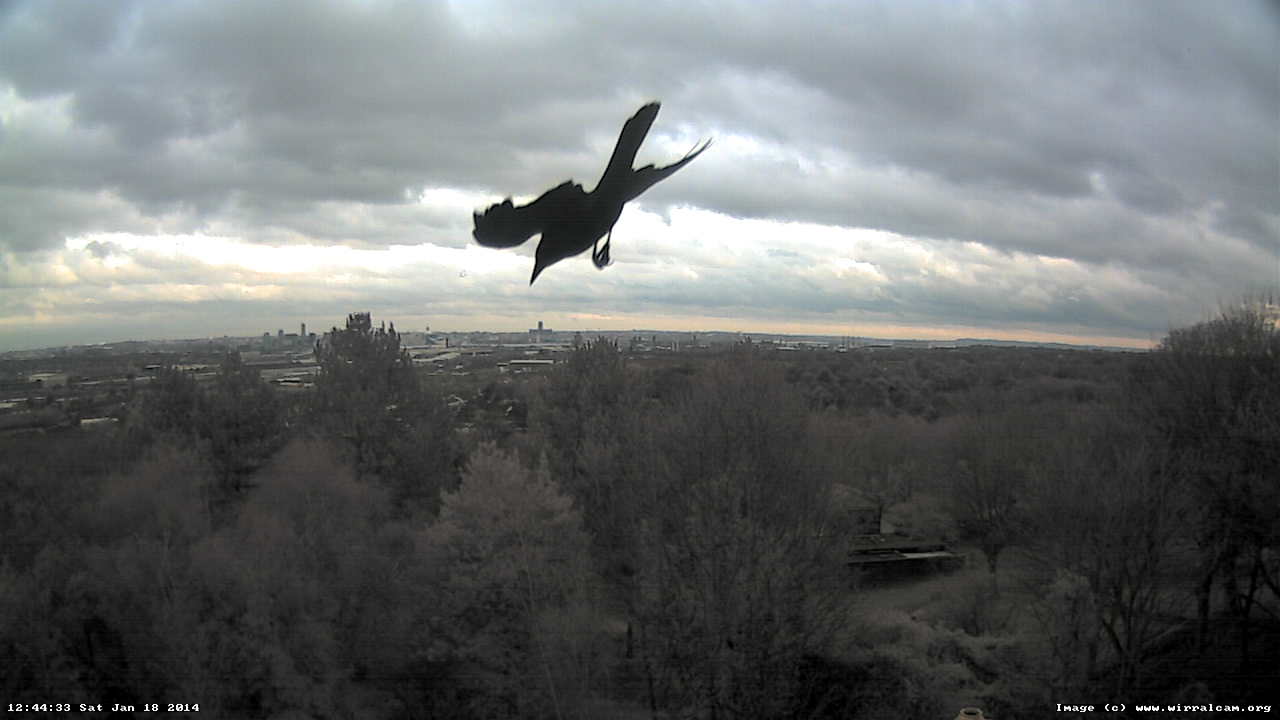
Woodpeckers

We’ve had reports of woodpeckers seen pecking at the metal roof of the lighthouse. This explains the curious sound that we’ve noticed recently, mostly during the early hours of the day, as the dawn chorus gets under way.

Have you seen the woodpeckers?

Do you have a photograph of them?

If you have, please leave a public comment on this post, or send us a private message through our contact form.


Mortimer 1847

Here is an extract from “The History of the Hundred of Wirral”, by William Williams Mortimer, 1847.

Bidston Lighthouse is an object very familiar to the inhabitants of Liverpool, and is one of the localities which command attention, as much from its prominent appearance as its mercantile utility. The Corporation of Liverpool having obtained an Act of Parliament, authorizing the purchase of Bidston Hill and the erection of a Lighthouse upon it, an edifice for that purpose was built in 1771. It consists of a substantial stone building with an octagonal tower, which from a distance has the appearance of a church, and is frequently taken by strangers for one. A long range of poles were formerly placed on the ridge of the hill, on which signals were hoisted to announce to the merchants of Liverpool the approach of their shipping; but the establishment of a line of telegraphs, from that town along the coast of Wales to Holyhead, has nearly superseded the old mode of communication. But as the lights, from their elevated position, are visible for a circle of fourteen miles, and blending with those at Leasowe Lighthouse, point out the entrance into Liverpool, the continuance of the establishment is indispensable for the safety of the numerous shipping trading into that port.

The Lighthouse of Bidston is deserving a visit, and the stranger will be amply gratified, not only with its construction and appendages, but with the varied and extensive prospect which is obtained from a small gallery that projects round the upper storey of the tower, at an elevation of three hundred feet above high-water mark. To the westward, the marshes, a plain of upwards of five hundred acres, on which graze more than a thousand head of cattle, lay extended beneath the eye of the spectator, protected from the inundations of the sea by a range of sandhills and an artificial embankment, which cause the numerous vessels in the Rock Channel to have the appearance of sailing on dry land.


Catoptrics

William Hutchinson, Liverpool Dockmaster, revolutionised lighthouse optics with the introduction of the parabolic reflector. He conducted experiments at the Bidston Signals Station during the 1760s, and subsequently installed reflectors in the Wirral Lighthouses. He writes, in his Treatise on Practical Seamanship:

“We have made, and in use here, at Liverpool, reflectors of one, two, and three feet focus ; and three, five and a half, seven and a half, and twelve feet diameter ; the three smallest being made of tin plates, soldered together ; and the largest of wood, covered with plates of looking glass”.

Hutchinson installed the largest one at Bidston Lighthouse, which was furthest from the sea. The large reflectors had some problems: they used a lot of oil, and smoke from the wick tended to obscure the reflector. Eventually, it was found that several smaller reflectors, arranged so that their beams were parallel, gave an equally bright light and used less oil.

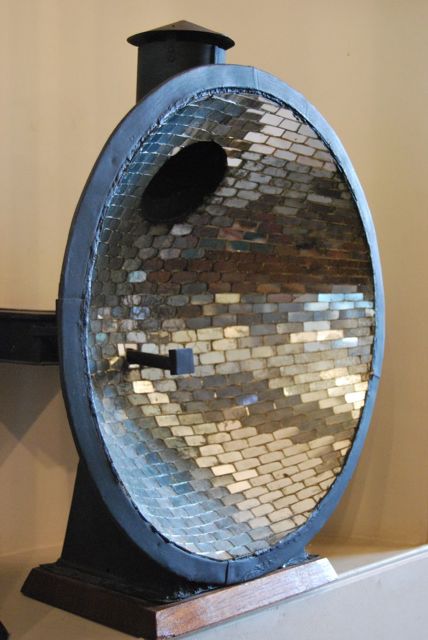
Trinity House have an eighteenth century parabolic reflector in their collection. Its diameter is twenty inches.

18th century catoptric reflector, in the Trinity House collection.

18th century catoptric reflector, in the Trinity House collection. Photograph courtesy of the Corporation of Trinity House.

Little is known about the provenance of this reflector, because, sadly, Trinity House was bombed in 1940, and many of its records destroyed. The reflector will be on display at the National Maritime Museum in Greenwich from March 2014 until January 2016.

Trinity House is 500 years old this year. Henry VIII granted a Royal Charter to Trinity House in 1514.

Most of the lighthouses of Liverpool Bay were built and run by the port of Liverpool, not Trinity House. The Mersey Docks and Harbour Board took over from the Liverpool Dock Trustees in 1858. It was not until 1973 that Trinity House took over Hilbre Island Lighthouse and Point Lynas Lighthouse from the Mersey Docks and Harbour Board.

Catoptric lights are based on the principle of reflection. They were eventually superseded by dioptric lights, based on the principle of refraction, thanks to the work of Augustin-Jean Fresnel. When Bidston Lighthouse was re-built in 1873, it was equipped with a Fresnel lens manufactured by Chance Brothers.

Acknowledgments. My thanks to the Corporation of Trinity House and Neil Jones, Archivist, for permission to use the photograph of the catoptric reflector.

In memoriam Barbara Liptrot

Barbara Liptrot passed away peacefully at 11:45 pm on Sunday 8th December after a long illness.

Her devoted husband Rod and beloved daughter Mandy wish to invite family and friends to her funeral service at Landican Crematorium on Thursday 19th December at noon.

Barbara Liptrot

Barbara Liptrot (1933-2013)

Bidston Observatory – Heritage for Sale

Bidston Observatory is up for sale, again. Here is the listing on RightMove: http://www.rightmove.co.uk/property-for-sale/property-28459380.html

Prospective buyers have only until 30th November to make their “best and final offer”. This seems a little rushed, given that the advert appeared in Wirral News only last week.

I hope the new owners appreciate what an important piece of Merseyside heritage they are taking on.

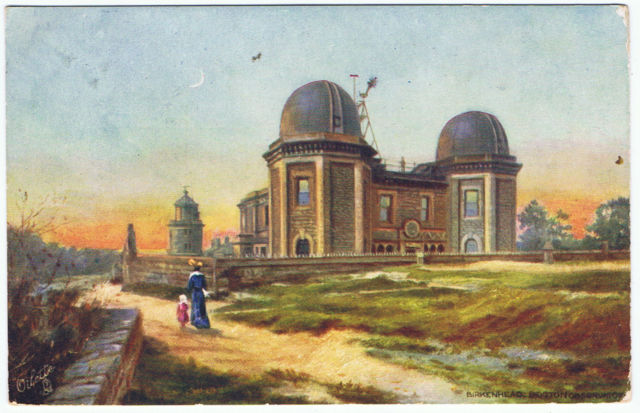
Bidston Observatory and Lighthouse, postmarked 1907

Bidston Observatory and Lighthouse, postmarked 1907

The Observatory was built in 1866, when the expansion of Waterloo Dock forced Liverpool Observatory to re-locate to Bidston Hill. It was built alongside Bidston Lighthouse and Signals Station, on land owned by the Mersey Docks and Harbour Board.  John Hartnup, astronomer and Assistant Secretary to the Royal Astronomical Society, had been the Director of Liverpool Observatory since it was built in 1843. Amongst his achievements was the calculation of the longitude of Liverpool, which was important for navigation and the development of the port. He presided over the move to Bidston Hill, and continued as director of Bidston Observatory until his retirement in 1885, when he was succeeded by his son. The second director, John Hartnup Jr  died on 21 April 1892, when he fell from the roof of the Observatory while making meteorological observations.

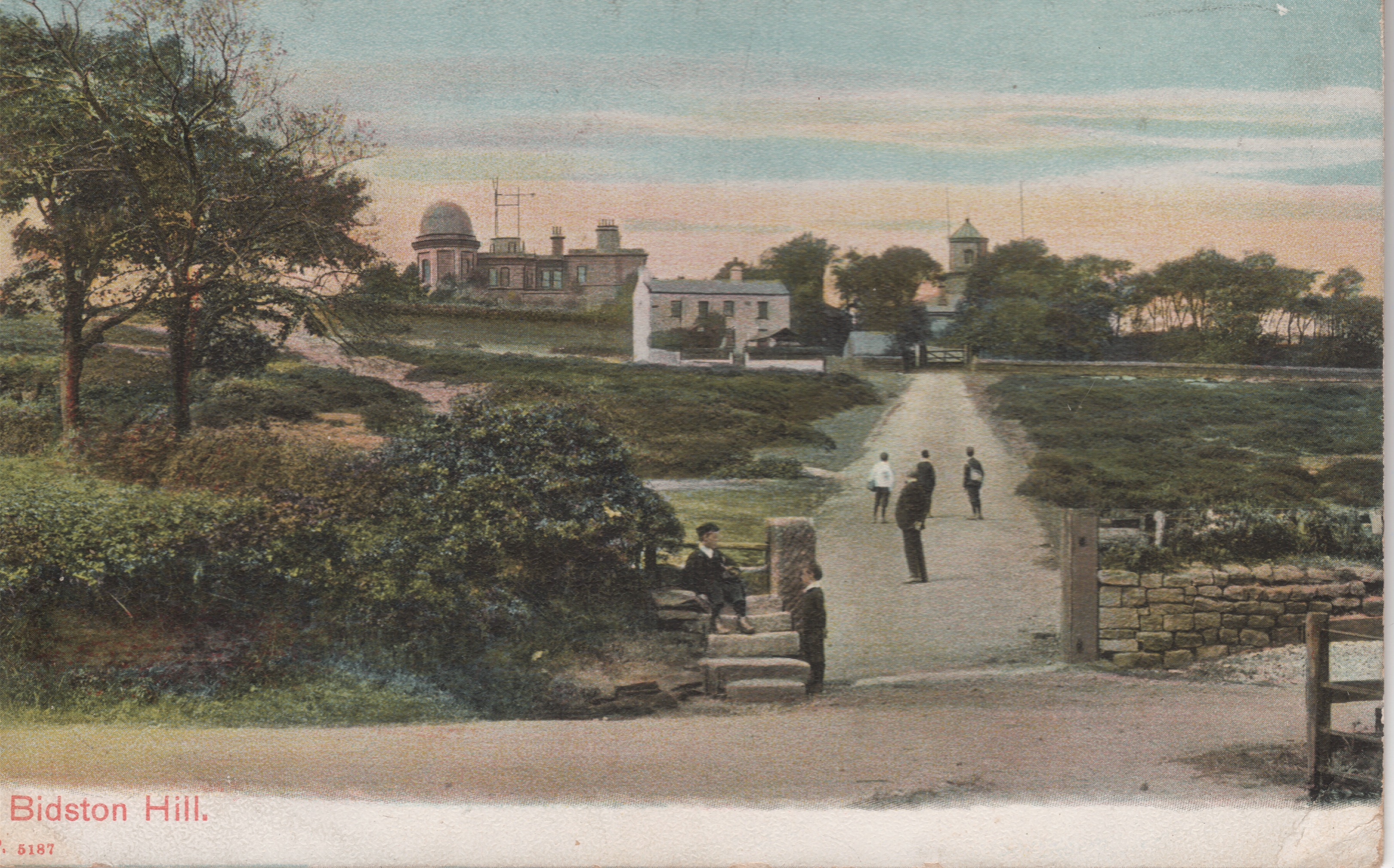
The Observatory, Lighthouse and Braehead Cottage from Boundary Road, postmarked 1909.

The Observatory, Lighthouse and Braehead Cottage from Boundary Road, postmarked 1909.

Over the years, the emphasis of the Observatory’s work shifted from astronomy to other things, but always in the tradition of Time and Tide, so important to the port of Liverpool.

Of Time. The progression from observations of the stars, to the determination of longitude, to the calibration of chronometers was a natural one. The Observatory’s two levels of cellars and other features made it especially suited for calibrating chronometers under controlled conditions of temperature and seismic vibrations. Marine chronometers from all over the empire were calibrated at Bidston. The One-O-Clock gun at Morpeth Dock was signalled from the Observatory by electric cable.

Of Tide. Ever since Liverpool’s harbour-master William Hutchinson (the same fellow who pioneered the use of parabolic reflectors in lighthouses on Bidston Hill) took the first extended series of tidal measurements over a period of nearly thirty years, Liverpool had led the world in tidal studies. This work became centred at Bidston Observatory when the Liverpool Tidal Institute was set up there under Joseph Proudman’s direction after World War I. Arthur Doodson’s work with mechanical computers for tide prediction happened here. One of his machines was used to predict the tides for the D-Day landings.

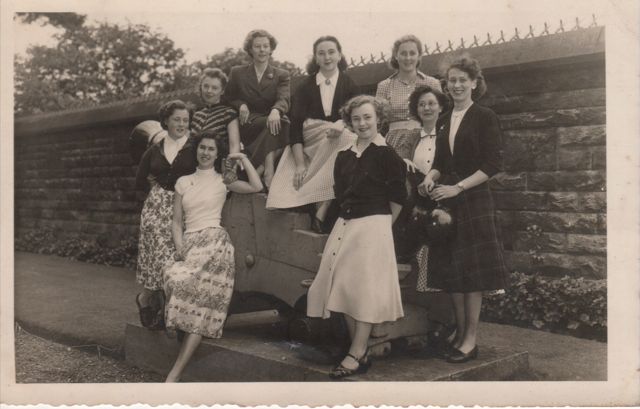
Observatory staff by the one-o-clock gun

Observatory staff by the original one-o-clock gun, after its removal to Bidston Hill from Morpeth Dock.

In 1969, the Natural Environment Research Council (NERC) took over responsibility for the Observatory. Oceanographic research continued to expand under their auspices. During the 1970’s, the Joseph Proudman Building was constructed in the former kitchen gardens of Bidston Lighthouse.

In 1989, the Observatory, Lighthouse and the perimeter wall enclosing them became Grade-II listed buildings.

In 2004, the Proudman Oceanographic Laboratory moved from Bidston Hill to a new building at the University of Liverpool. Their oceanographic research is still continuing today, but now in the guise of the National Oceanography Centre. NERC’s plans to sell the site to a developer aroused opposition from local pressure groups, and the spectre of an eleven-story high-rise residential development was averted.

Bidston Observatory has featured on TV on several occasions, including episodes of Coast (Series 7, Episode 5: “The Riddle of the Tides”), Inside Out, and Where’s Fred. Joyce Scoffield, who used to work in the Observatory, has written a book about it: “Bidston Observatory: The Place and the People”, 2006 (available on Amazon). J. Eric Jones wrote “From Astrononomy to Oceanography – A brief history of Bidston Observatory”, which you can download from the NOC web site.

View from Observatory roof, March 2013

View from Observatory roof, March 2013.